The Bee Diaries – Arrival of the Bees!

bee dairies logoFinally after much preparation  the nucleus of bees were collected, the best method of getting the bees settled into their new hive was explained and with reassurance that the queen was included, marked and clipped I was on my way home with my new hobby in a box.

The nucleus box is a purpose made plastic Correx pack with ventilation grills and sealed door, the lid was securely taped down, however this didn’t stop me being slightly apprehensive on the drive home!

I was given a tip for transporting the nucleus, that was to keep the width of the frames (length of the box) in the direction of travel, I’m not entirely sure of the reason but it was advised; perhaps something to do with the stopping the frames moving.

IMG_0343

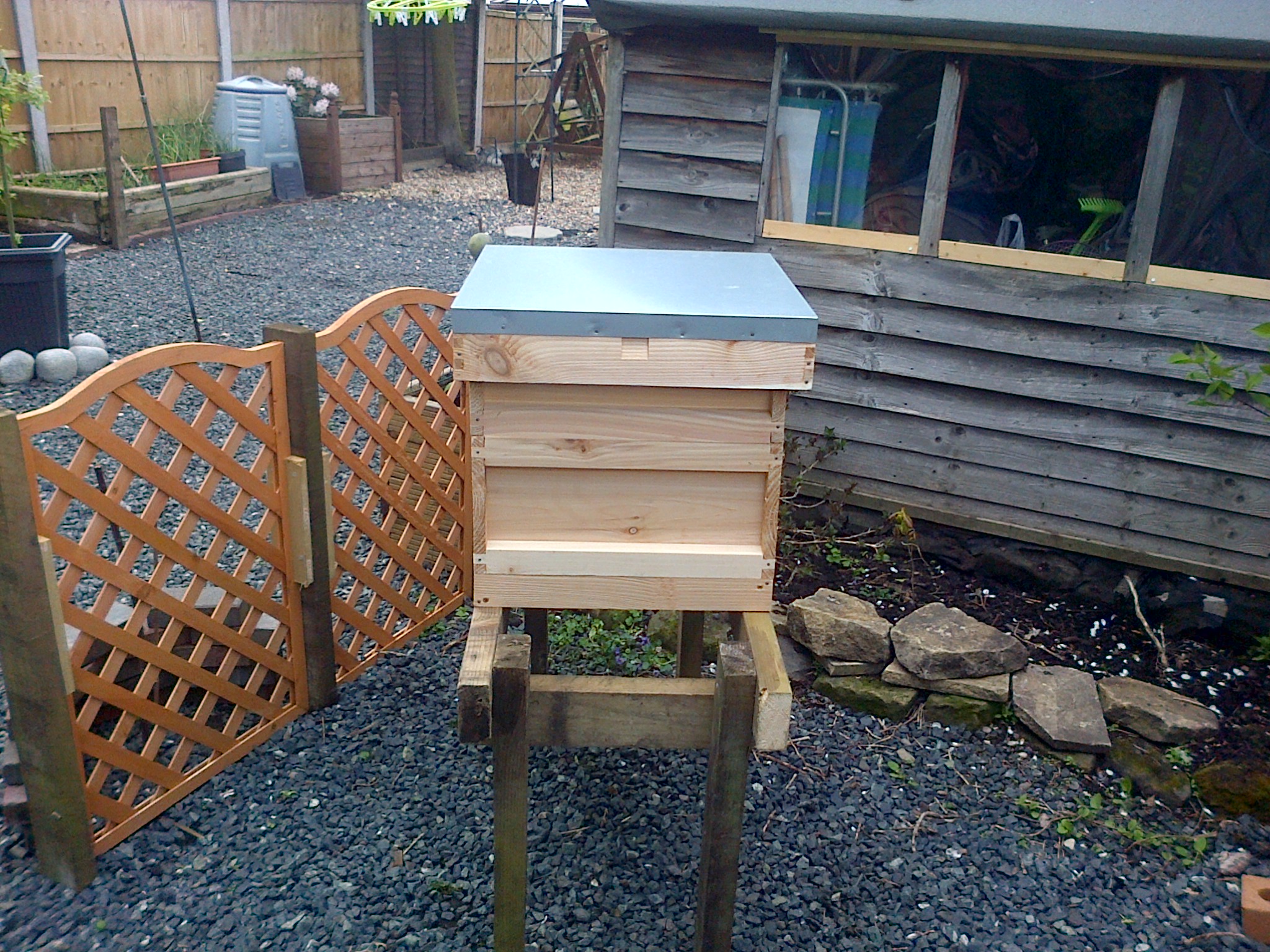
With the nucleus safely home I set about placing the hive, tools, feed, smoker and equipment in place in the apiary.
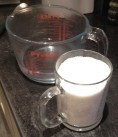
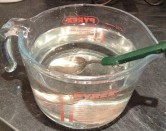
IMG_0339The feed is prepared in advance and is a syrup that the bees will require IMG_0340for at least a week or so, it’s a very simple 1:1 mixture of sugar and water; hence 1 cup of water to 1 cup of sugar completely diluted into hot water.
IMG_0342

IMG_0346

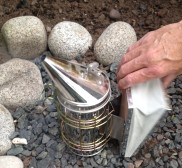
For the smoker I used cardboard as fuel, placed into the grill of the unit and lit; pumping the bellows provides a ‘puff’ of smoke. The purpose of the smoke is to force the bees to eat the honey and therefore calm down – I think the reason is that they think the hive is on fire and need to gather the stores. So it’s best not to use too much smoke.

IMG_0347I had my wife video the whole experience, she was hidden in the shed next to the hive, I have silenced this due to the panic comments that she made! watch here. (correction this isn’t muted, so just adds to the entertainment)

This was my first solo experience with bees; my only other opportunity was on the taster course a few months ago supervised and only handling one frame. I felt reasonably confident; however it is recommended to get a bee keeper with some experience to oversee what you are doing.

IMG_0348Opening the nucleus lid for the first time, the bees instantly started to buzz around, not so aggressively but with intent and had I not been wearing my gear they probably would have stung me.

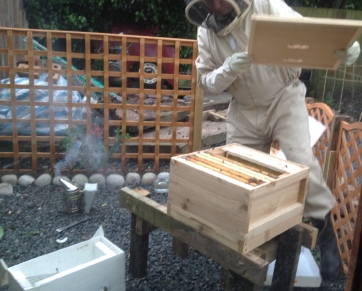
My gear consisted of wellington boots, the suit & gloves. Propolis was adhering the frames in place so I needed the hive tool to gently pries out the first frame. Lifting it out of the box I briefly inspected it and every subsequent frame for the queen; I think I spotted her on the third frame however with my inexperience I may be wrong.

Applying a light puff of smoke where necessary the final task was to ‘knock’ and pour the remaining bees into the hive, first checking that the queen wasn’t in there. The aim here is to knock them all into a corner, then firmly, knocking them out of the box and into the hive (easily said than done).

IMG_0353

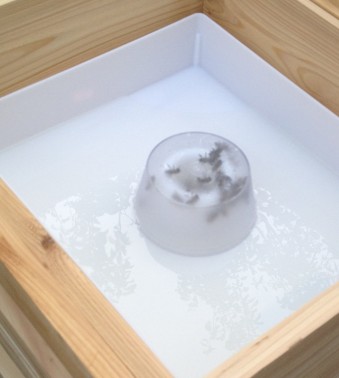
Taking care not to crush any of the bees, I placed the crown board, closely followed by my feed tray.
IMG_0352

IMG_0357

The feeder is a central holed unit so does not need any crown board modification, the design is such that it only allows access for the bees to go up and through the central port to get to the feed. The surface of the hole is textured to allow the bees to grip the side walls and hopefully not slip into the feed and drown.

Pouring the prepared syrup int the feeder, the bees were accessing the feed within seconds as if trained to do so.

A plastic lid covers the feed tray and the hive lid finally placed on top to complete the hive. I didn’t include the queen excluder frame at this stage as I had been advised that it is unnecessary as the queen will not normally go to get her own food and is actually fed by others, a proper little royal!
IMG_0356

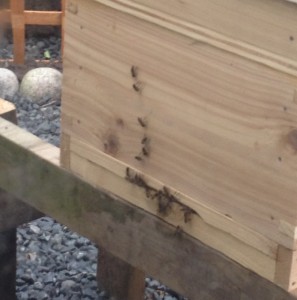
Within minutes the hive door was been used and everyone seemed to know their role in the community.

Looking back at the video I needed to add a few more frames and I meant to put the ones that were in there butting up to the 5 frames that came with the nuc.

I also added a shallow bowl of water close to the hive on the floor and floated a flat piece of wood in it to give the bees a platform to land and take on water, we also have a pond with Lilly pads that will also serve as a water source.

Water is not stored by the colony so it is collected and used when needed; to

  • dilute honey to be eaten
  • mix with pollen to make brood food (70% water) to feed larvae
  • dissolve hardened granulated sugars
  • cool the hive when temperatures are very high.

I will inspect the hive two days after the install and check the feed levels, add the missing frames and see if queen is visible with too much disturbance.

Having had chance to observe there is good movement in and out and its fantastic to see how they have a defined flight path into the door of the hive, they truly are fascinating to watch.

I would like to set up a web camera to view their activity and this may be a project to undertake very soon.

Next time…. I will be considering my first proper inspection and reading up on what I need to be looking out for.

Posted in Bee Keeping | Tagged , , , , , , , , , , , , | 4 Comments

The Bee Diaries – Quick Update & Final Preparation for the Arrival of the Bees.

Previously we sited the hive….

Finally, after months of waiting, I finally get to collect the Nucleus of bee’s next week on Wednesday 17th June.

So, just a few final things to check and finish off:
IMG_0821(1)Apiary – I finished off the enclosure a few weeks ago, I went with open trellis fencing so that the bees can pass through with no problems, it also allow the fruit plants to flourish and weave their way into a natural fence.IMG_0820

IMG_0815

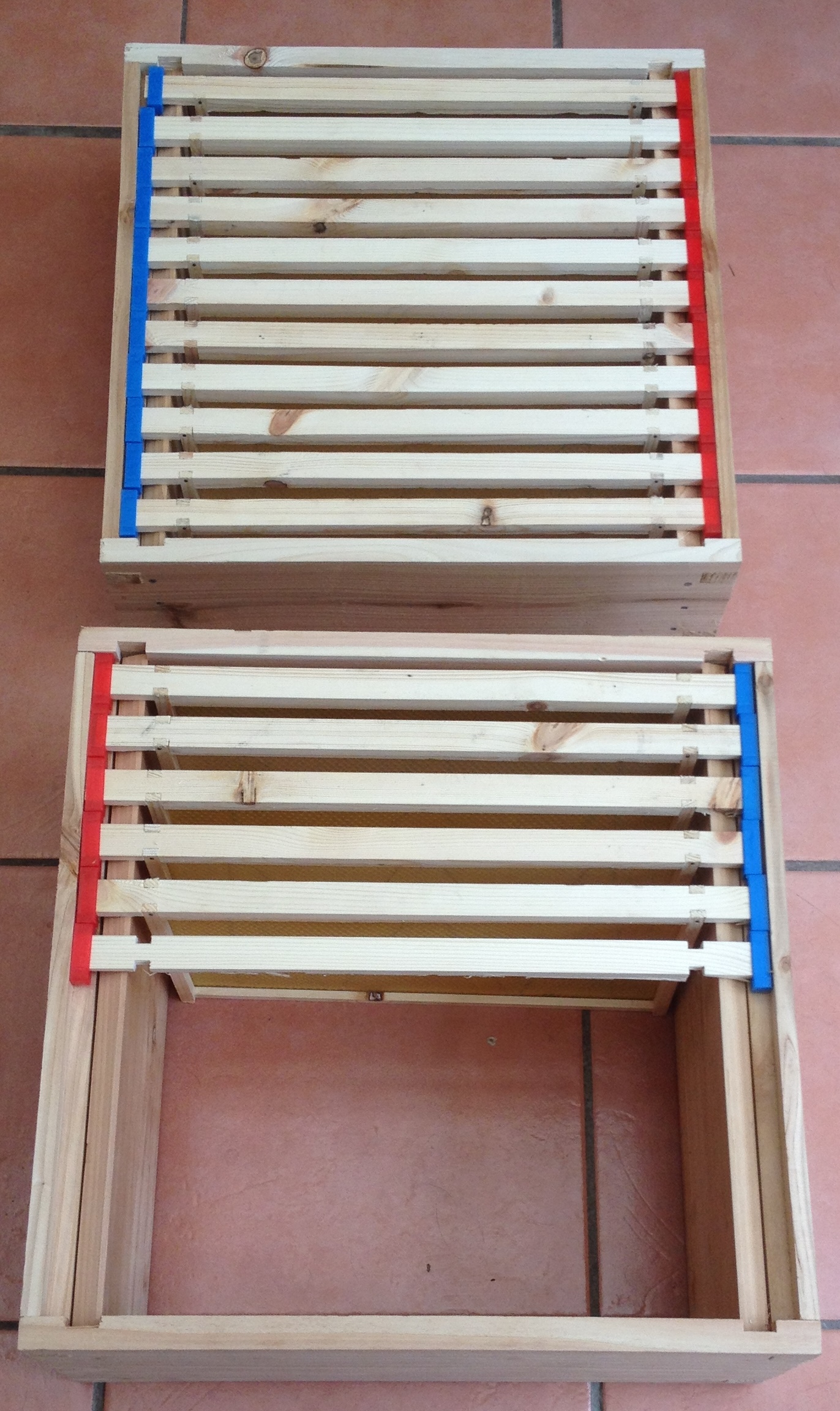
Hive – The nucleus will be arriving with 5 brood Hoffman      spaced frames; I will be using spacers on my frames certainly in the brood chamber, so these will need the small plastic spacers shown in the images. IMG_0822

The colour coding for me signifies left and right, that way when I remove these during inspection I know which way to put it back in.
I have made a few extra frames to save time should I need them.

The nucleus is being purchased from Tiger Hall Bee keeping in Church Stretton (UK). The total cost is £170 with a deposit of £25. I select these because they were reasonable close (35 miles) and they had exceptional feedback, they exceed the BBKA standard and claim to raise calm but productive bees.

So next time I should reporting on the bees actually in the hive!

Posted in Bee Keeping | Tagged , , , , , , , , | 3 Comments

Survivalist Prepper – Survival Challenge.

Dale from the Survivalist Prepper (www.survivalistprepper.net) set a challenge for any members who wanted to participate.
The idea is to send a box with some supplies (no more than $20 worth) and a small list of challenges that they would like the recipient to complete in a 24 hour period.box
The recipient will need to make a video or take pictures of what they have done and share it with everyone else. The purpose is for learning something new and to have a bit of fun along the way, but nothing dangerous or illegal.

As I reside in the UK and Dale in the USA, to keep postal costs to a minimum we used Amazon as a selection and local delivery option which worked well, a package arrived last weekend with instructions sent to my wife by email.
oneMy Challenge was to evaluate a low cost solar USB charger that Dale had provided.

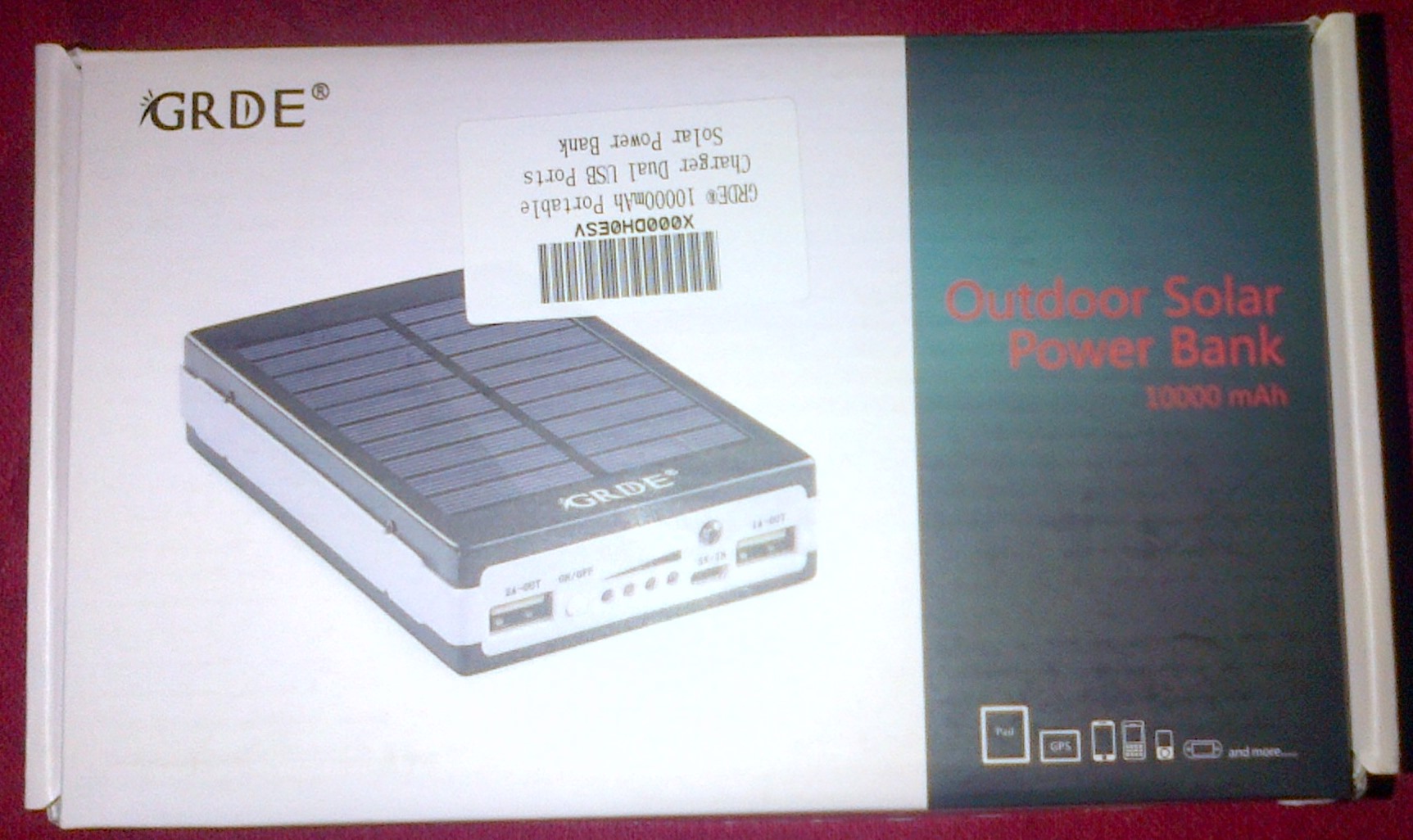
The unit is a GRDE 10000mAh Outdoor Solar Power Bank; it comes with a USB lead with adapters Nokia DC 2.0, Mini USB, Micro USB & iPhone.IMG-20150528-00210

I have given this an overall rating of  6/10 .

I consider this to be a reasonable unit for the cost, its has a good selection of accessories and the dual USB ports are very useful. It is let down by the potential fragile casing and the annoying resonant noise at full solar charging.  Also despite having the unit in the sun all day the best that I could achieve was a 25 to 50% capacity. So my estimate is around 3 days for a full charge via solar.

My Assessment

Upon opening for the first time you notice the immediate attempt for the unit to charge via the solar panel indicated by flashing lights even when indoors at night with an electric light lit.

Some of the available data on the internet from sellers had recommended at least three full charges via the mains before solely relying upon the solar charge.
Having read that the GRDE had five intelligent protection systems to prevent, over current, short circuits, over discharge, voltage protection and overcharge, I felt confident enough to charge the unit overnight via the mains electric.
Over the past week I have carried out 4 specific tests (full details of the results included below)

Multiple Device Charge 9/10

The first three tests evaluate the capacity to charge multiple devices, multiple times are a 6 day period with no recharge.
Overall, I was impressed by the amount of device charges that could be obtained from the stored charge of the GRDE.

Test 1 – A dual charging test using the two USB ports on the GRDE, a Nokia Lumina & Nexus 7 with 11% and 70% remaining capacity, both devices achieved 100% charge in 2 hours 45 minutes.
Test 2 – Without any recharge and covering up the Solar panel to stop additional charging, the GRDE was used two days later to charge a Blackberry Curve 9320 with 0% capacity. A full charge was obtained in 2 hours 10 minutes.
Test 3 – Again, as in Test 2, the GRDE was not charged or allow to charge. A Nokia Lumina with 10% capacity was charged for 1 hour 30 minutes before the charger unit auto shut off.

Continuous live feed 9/10

The fourth evaluation was to test the continuous feed for a portable low voltage CCTV camera, in this test the video continued to record for twelve hours thirty minutes. The day was overcast IMG-20150605-00235so did not provide high solar charge,

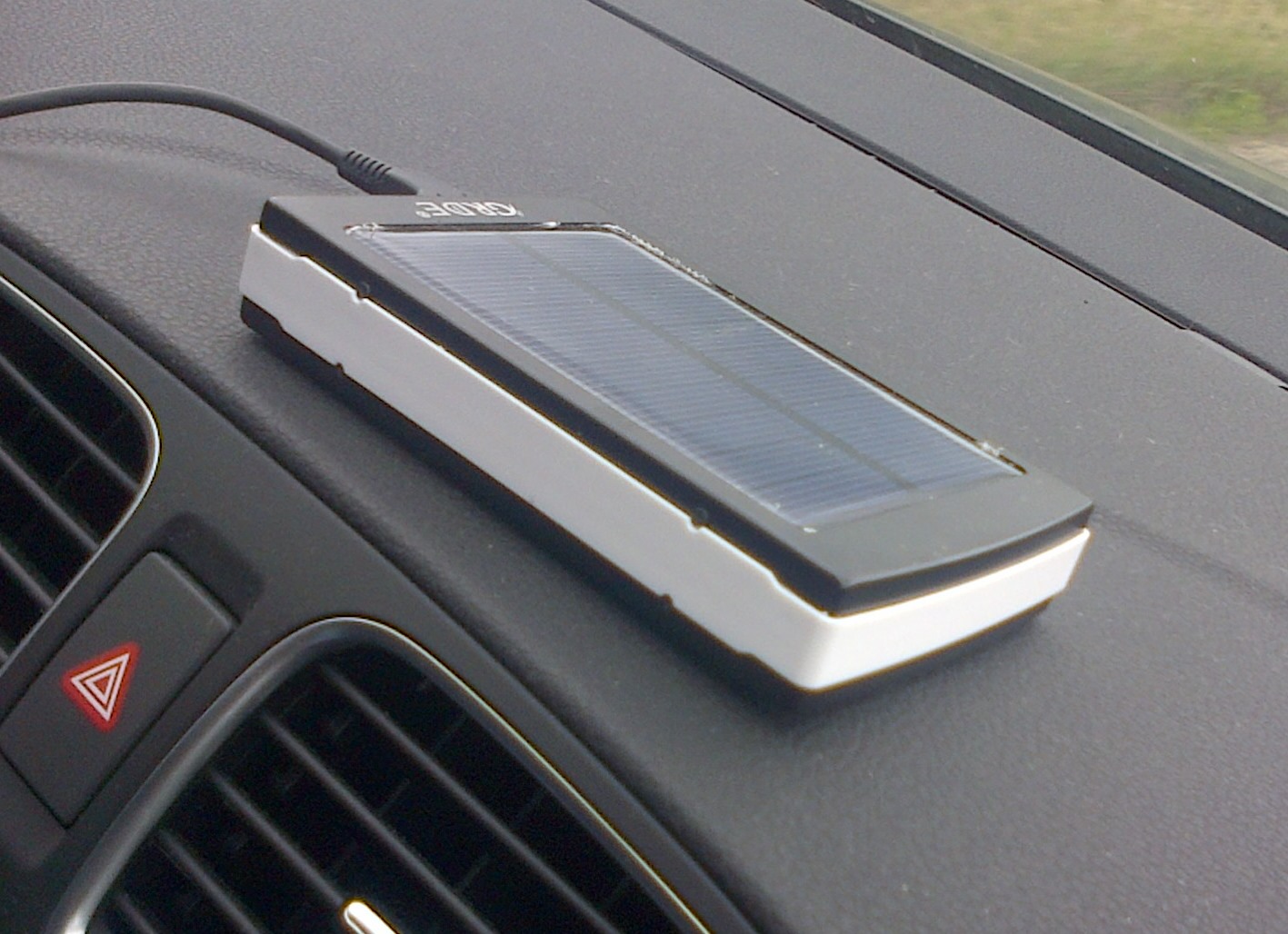
IMG-20150605-00240When the vehicle was stationary the solar unit was placed upon the dashboard to maximise the charge, when driving the device was placed on the passenger seat.
For a survival use, being able to set up the device to provide a continuous live feed to a CCTV camera remotelyIMG-20150605-00237, i.e. remote surveillance is a good additional use for this device.

LED Torch 2/10

The unit has a single LED light; whilst this will suffice for very basic close lighting work, it doesn’t function very well as a torch, but of cause is better than nothing in emergencies.
Durability 4/10
The casing is hard plastic that will probably not withstand any drops without breaking, I would recommend a foam lined case for carrying and outdoor use.

Solar Charging 4/10

The solar charge appears to be easily activated, however the charge rate indicator LEDS show slow recharging of the internal storage battery, the unit also has an annoying buzzing sound that gets louder with the strength of the sun’s rays. Despite putting the unit in strong direct sunlight for a whole day it still only managed to charge its internal batteries 25 to 50%.

Mains Charging 8/10

With the safety features including in the device the unit can be left for extended periods without being concerned about overcharging.
Value for Money 8/10

Amazon.co.uk has the GRDE for sale at £18.99 ($19.99 Amazon.com), for the cost I consider this be good value for money.

Full Test Data
Test 1: Nokia Lumia 635 with 11% battery remaining & Nexus 7 with 70% battery remaining
The Nokia has a Li-Ion 1830 mAh battery (BL-5H), at 11% capacity I have assumed that the level is 201 mAh and therefore the charge required would be 1629 mAh.
The Nexus 7 has a 3950 mAh battery, at 70% capacity the remaining charge required is 1185 mAh.
Devices were kept on during the charge, the Nokia was powered off, the Nexus was in standby, and all services were enabled.
Solar charging was enabled using the dusk sun between 19:30 to 21:00 hours and checked periodically with the following results:
• 20:00 – Nexus 65%, Nokia 35%
• 20:35 – Nexus 75%, Nokia 55%
• 21:00 – Nexus 85%, Nokia 71%
• 21:20 – Nexus 89%, Nokia 91%
• 22:00 – Nexus 98%, Nokia 99%
• 22:15 – Nexus 100% , Nokia 100%

At the end of the test the solar unit still had 3 out of the 4 LEDS lit (50 to 75% capacity).

Leaving the solar unit in its packaging to avoid any recharge for two days before attempting the next test, upon opening there was no apparent deterioration of the battery capacity. Keeping the solar panel shielded to stop any solar charging, the next test was to charge a single device.
Test 2: Blackberry Curve 9320
The Blackberry has 1450 mAh battery; the device was switched off due to a zero capacity battery.
The following charging results were obtained:
• 19:40 charging commenced
• 21:50 Full charge

At the end of the charge the GRDE still had 3 out of the 4 lights lit signifying 50 to 75% charge.
Again the unit was placed into its box and kept away from solar charge for another two days.

Test 3: Nokia Lumia 635 with 10% battery remaining
With the solar unit covered to stop solar charging, and still 3 out of the 4 charge lights lit, the Nokia Lumia with 10% battery capacity was charged, the charging time was 1.5 hours and reached 45% capacity before the solar unit switch itself off charging.

Test 4: HD 1080p LCD night vision CCTV in car DVR accident camera video recorder

This device takes a DC5V power input, using the 2A output feed from the solar unit, with a full charge (75 to 100%) and allowing the unit to charge via Solar the CCTV video camera recorded continuously for 12.5hours.

Posted in Solar Charger | Tagged , , , | 1 Comment

Bow Making – an epic first attempt fail!

Having once owned an American Flat bow and turned my hand a basic fletching of my own arrowsflatbow I was intrigued as to how hard it would be to actually make my own bow.  My research led me to the Youtube ‘educational channels’ and I found a few excellent step by step videos showing how to make a bow from a single wood bow stave.

My flatbow was sold in 2014 to raise funds for a compound bow, however I still had a desire to make my own from ‘scratch’ so when Black Bear Bushcraft announced that they were running their first Bow making course, I natually signed up myself and my wife for the weekend course.

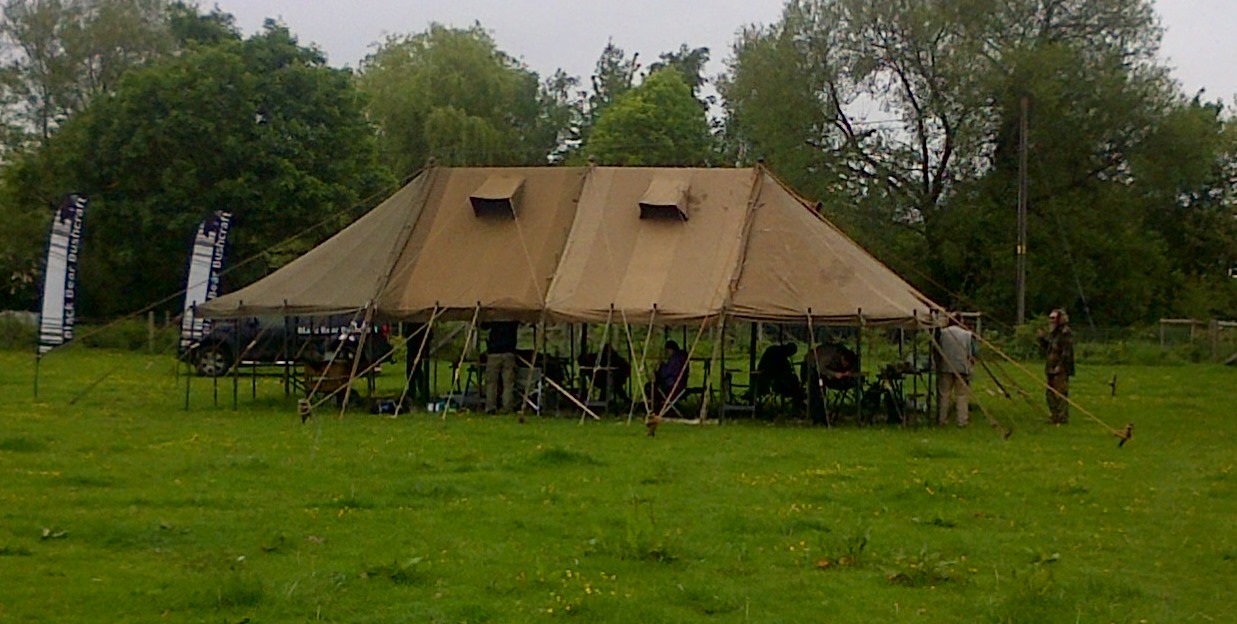
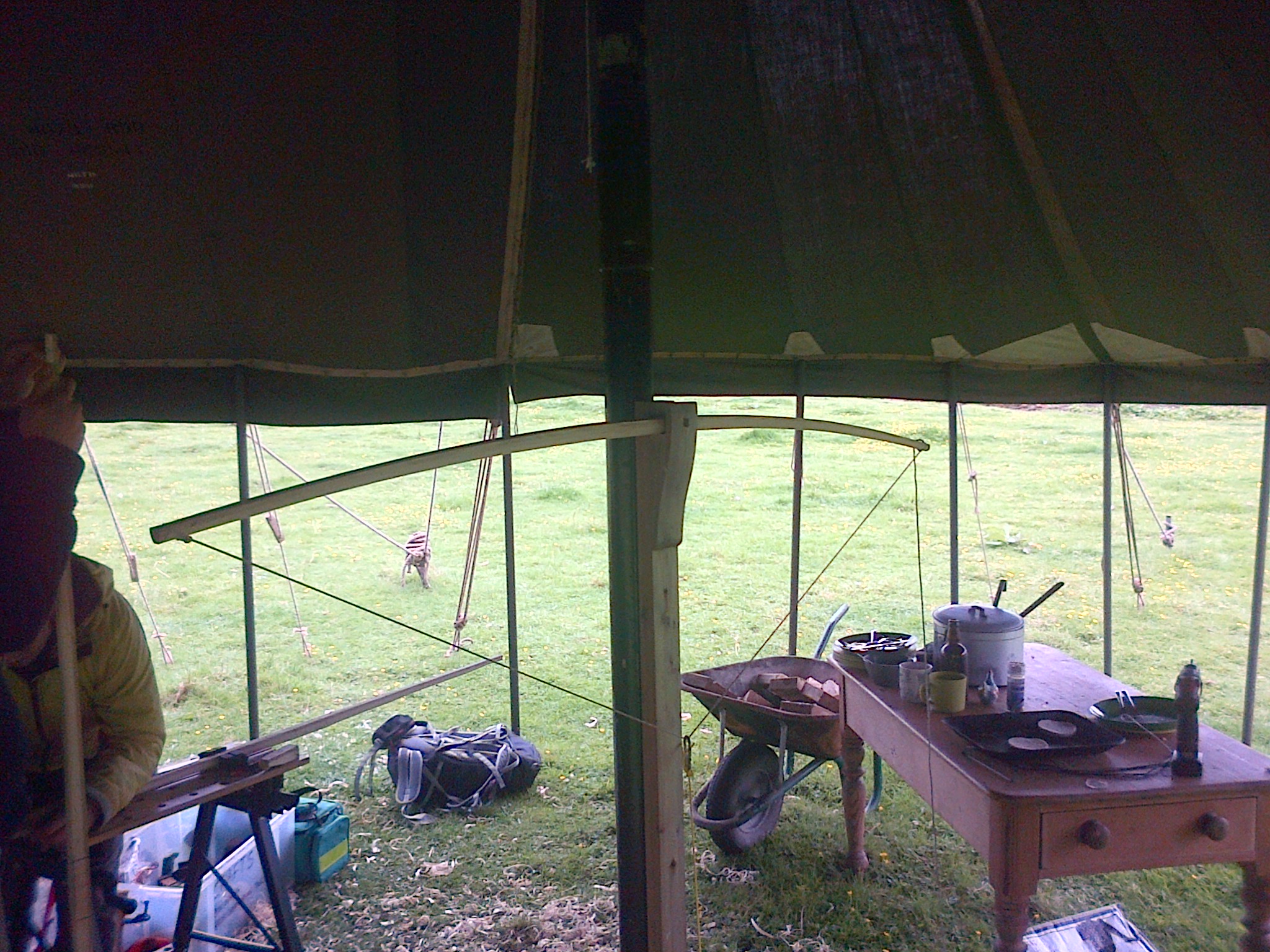
Wychavon-20150524-00189Set in a Small holding farm in Worcester on a sunny weekend in May we arrived to be greeted by Jake (one of the Black Bear helpers) and some of the other 9 students ready to take on the task. The setting was ideal with an open workshop under a retro tarpaulin canopy.IMG-20150523-00134

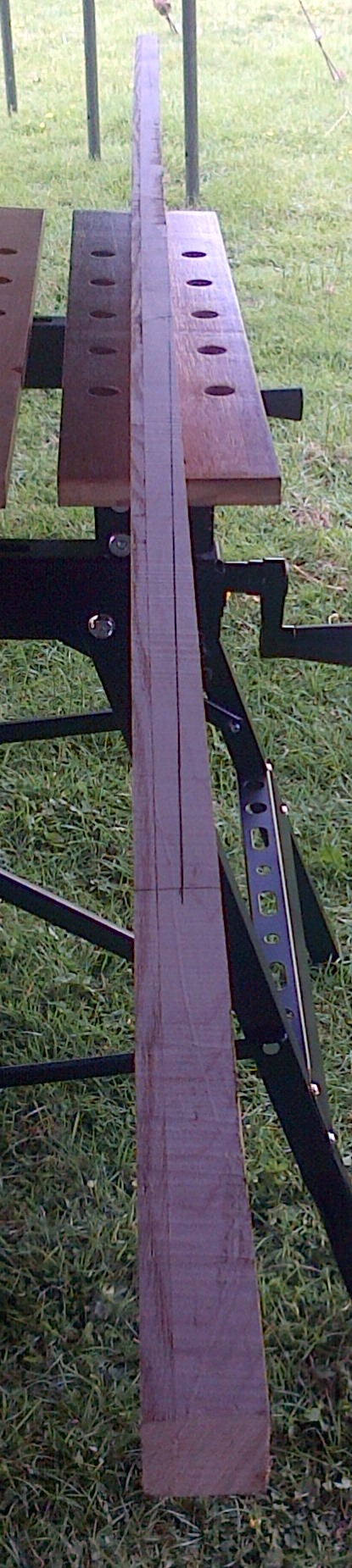
Each workstation was kit out with a laminated bow stave, stool and work mate table, pencil and sharpie marker. Starting a little late due to a last-minute dash for tools, Dan roughed out the dimensions on his stave explaining a little about the English longbow history as he went along. The aim of this course was to make a D shape English long bow and on the second day be in a position to shoot the bow.

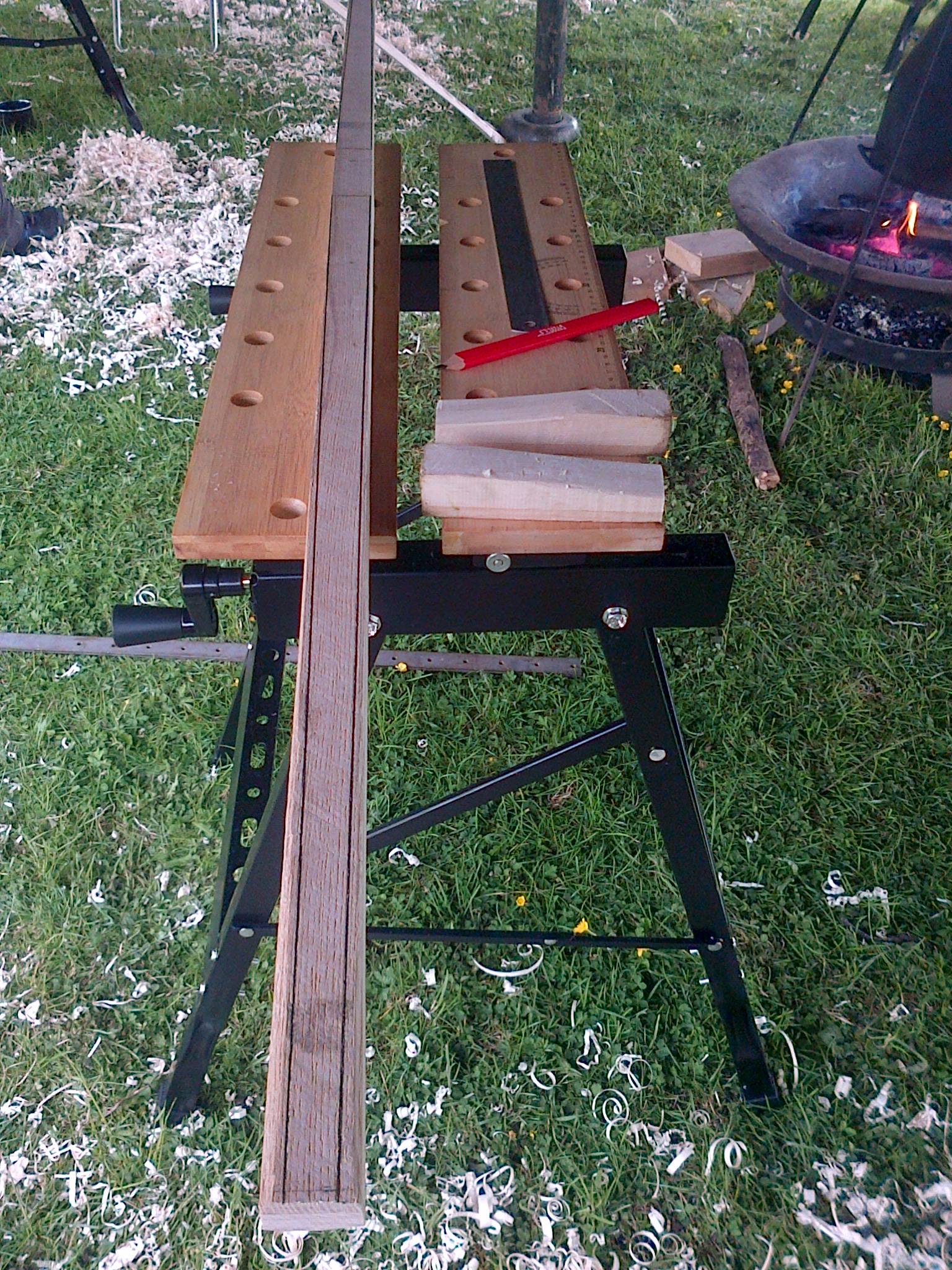
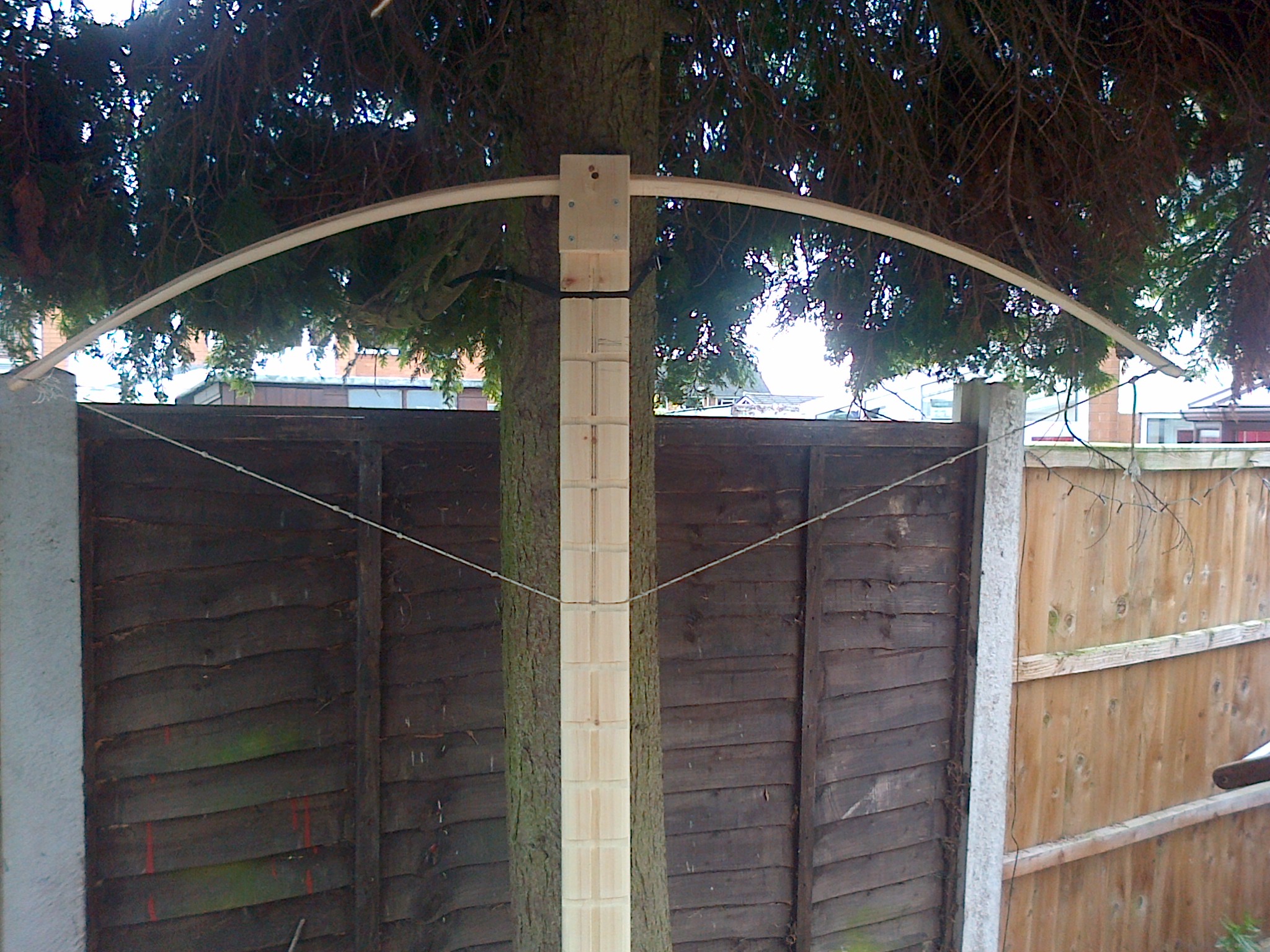
IMG-20150523-00145IMG-20150523-00160Marking out the bow firstly by finding the centre lines and then marking 100mm for the handle and the bow length which was roughly the height of the bow maker. The width of the bow at the handle was 33mm tapering symmetrically down to 15mm at the ends, likewise the thickness of the bow stave was tapered down from the handle to 15mm at the ends. The choice of tools were the block plane, spoke shave or for the traditional, the draw knife. Personally I used the Spoke shave, however knowing what I know now I would choose the Block plane for this type of bow making.IMG-20150523-00165

Stage one was to remove the excess wood in the marked areas.

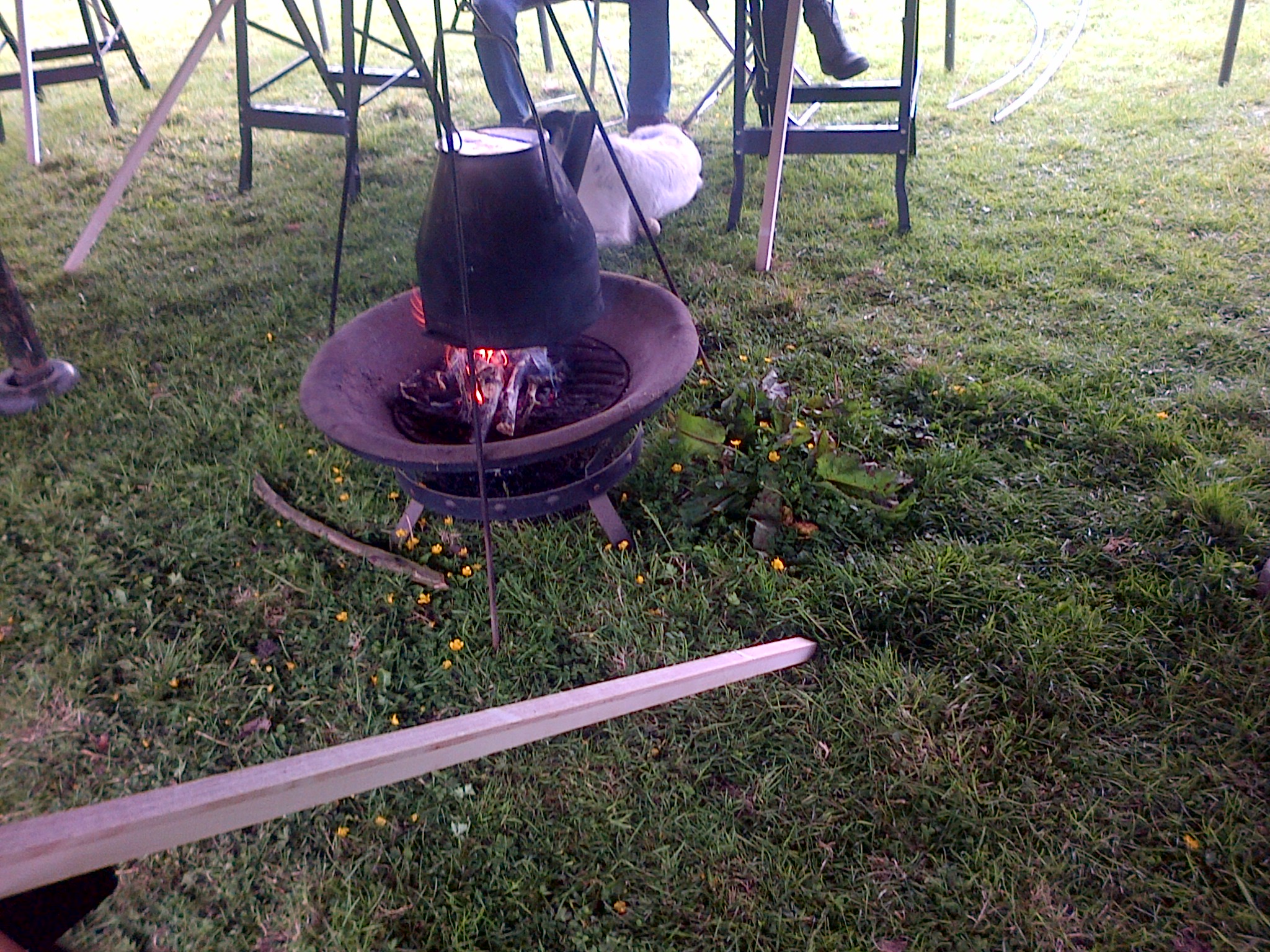
With the camp fire kettle on constant boil IMG-20150523-00141there were plenty of refreshments. A ploughman’s lunch later and by the end of day one almost everyone had IMG-20150523-00173shaped their stave as required and started to use the cabinet scrapers to finely finish it ready for stringing.


With an evening meal of pulled pork and the option of a few locally brewed beers over and as darkness fell, the camp settled in for a chats and stories around the camp fire.Wychavon-20150523-00181Wychavon-20150523-00179


A nice early start the next day, restarting the fire and getting on the first brew of the day!Excited about finishing off the bow.  Scrambled eggs on toast consumed we set about marking the nocks on the staves ready for tillering.Wychavon-20150524-00191

Wychavon-20150524-00190Using a tile cutter to file the groove in the stave made it a relatively easy task.

Using paracord as a bow-string during tillering, the staves were strung and the art of tillering commenced.

Wychavon-20150524-00185


It was at this point that I was first concerned about the instruction given to not use the planers or shavers and to only remove wood with the cabinet scraper.  The bows at this point were still very solid with little to no flex even under strain from the tiller. The whole day was taken up tillering and scraping small amounts of timber when it was clear to me that we needed to remove far more to obtain the curve required with the pressure loading.

Again, I couldn’t fault the food and environment and continuing as instructed we all painfully removed small amounts of wood and by the end of the day, I and a few others had proper string on their bow, however these were far from been capable of shooting an arrow. Wychavon-20150524-00197

The gentleman shown working his bow in the image was minutes away from snapping his bow!

IMG-20150530-00224IMG-20150530-00214Despite the disappointment of not finishing the bow we headed home and I made a tiller and continued to work on my bow as instructed for a further weekend, eventually it broke!IMG-20150531-00232


I discussed this with Dan at Black Bear Bushcraft sending him images and sketches of the bow at the break and he kindly sent through another stave for me to work on.Bow Dims


This doesn’t look good on Black Bear Bushcraft and I understand that some of the other attendees on the day took their complaints a lot further, however this was the first session and some leeway has to be given, Dan offered for anyone who didn’t complete to attend the next session free of charge and I have since seen that a subsequent group a few weeks later had a better success rate.

Since this epic failure I have successfully shaped, strung and shoot my second attempt at making a bow and have almost finished a child’s longbow from one of the broken ends of the broken bow.

The next write-up will go into detail of how to make a longbow and shoot my first arrow.

Posted in Bow Making | Tagged , , , , , , | Leave a comment

Fuel Storage

Why store fuel?
In the event of a disaster, bugging out or leaving home may be the only option, alternatively bugging in and having to collect friends and relatives, or to go out on supply runs would require vehicles with enough fuel in the tanks.
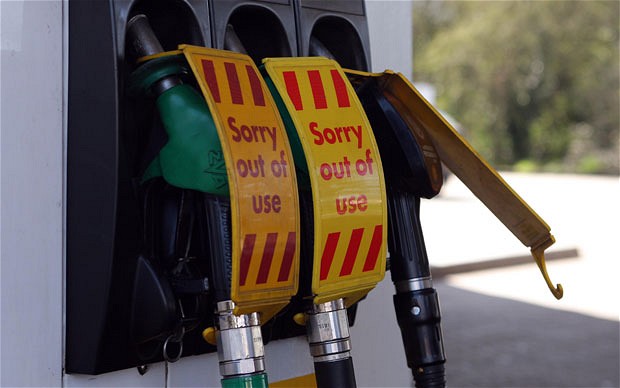
out of fuelIn everyday life keeping your tanks constantly topped up ensures that you won’t run out and potentially putting yourself and your family at risk on the side of the road in vulnerable and dangerous situations.
Lawnmowers, generators etc. if these are being relied upon for power, then fuel storage is essential.
Prepping is also about your own personal disasters and running out of cash for whatever reason is stressful, having extra fuel stored and not having to purchase more is one less cost to worry about.

Recall over the past few years how many times you have been faced with a fuel shortage, I have personally witnessed how people react in the queues at local fuel stations, frayed tempers, violence, desperation, queue jumping, etc.
Consider the reasons why fuel has ran out in the past:
• Local service station poor management – car-fuelhow many times have you been down to your last 5 miles in the tank only to pull up on a service station and they are out of your grade of fuel?
• Tanker driver strikes – a 3 day strike announcement creates panic, stations run out and those left inflate their prices.
• Bad weather – tankers can’t get through, again panic soon sets in.

How to Store fuel

The most effective and simplest way is direct within the tanks in your vehicles; this is safe and ready for immediate use should you need it.
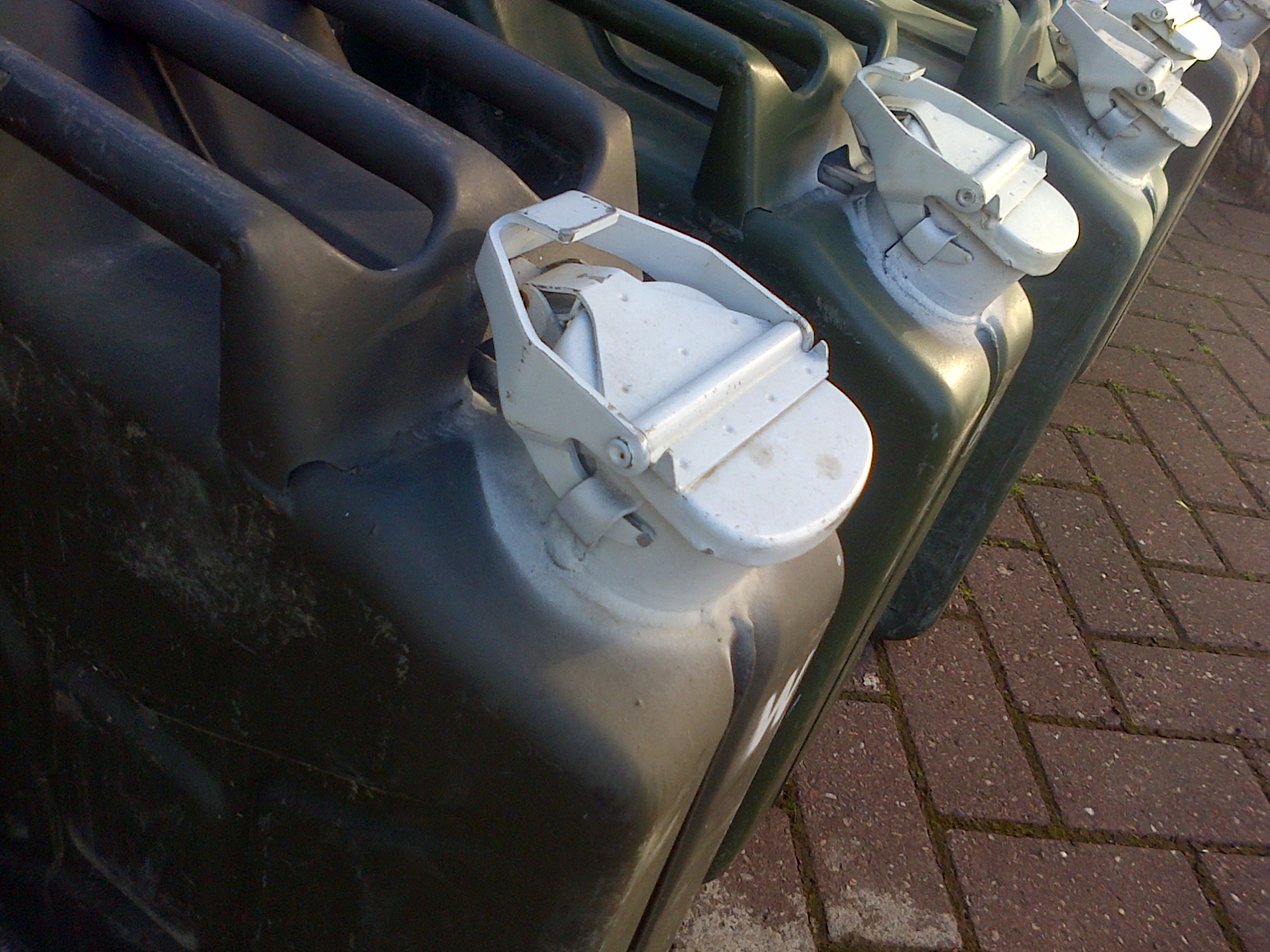
Telford and Wrekin-20150520-00133Having a secondary backup quantity in fuel containers is a good option, however only use containers that are designed to take fuel, these are usually metal or plastic, also a good idea to mark the container to show the fuel type being stored.
If you are storing petroleum for a period of two months or more then you may need to add a fuel stabiliser.
In England the recommended limit on petrol storage at Home or a Non-business is 30 Litres, any more than that and you should notify your local Petroleum Enforcement Authority in writing, giving your name and address as the occupier of the storage place or the address where the fuel is stored. This is not a new requirement but carries forward long standing requirements of the previous legislation. The guidelines for Diesel are different again, my advice is to check with your local authorities and ensure that you are not invalidating your home insurance by storing fuel! Use common sense and store as far away from the living area of the home as possible.

Cycling the stored fuel each month or so will ensure non-degradation, simply top up the container again next time you fill the tank.
Alternative options are use several containers and tag each with a consecutive month from the current one and use each one during that month, therefore filling up three containers from now (May) would be tagged as June, July & August. In June you use the fuel in that container and refill it, then tag it with September, and so on.

A supplemental link to long term storage of diesel can be found by clicking here

Stay Safe!

Posted in Fuel Storage | Tagged , , | Leave a comment

Health and Fitness

Let’s get this straight from the start, I’m no fitness guy! I’m currently overweight but not necessarily that unfit for my age.

I do however recognise the necessity to stay as fit as possible, to eat well, exercise and stay generally healthy both from a quality of life and prepping stand point.

At the age of 14, I was told that my dad had leukaemia, not a clue what this was and no internet back then I used the library to gain information, it didn’t read well! He went on to survive for 25 years after been given months to live. We learnt to live day by day, staying as germ free as possible. My dad claimed that it was his fitness at the time of being diagnosed that helped him fight. He had started Jogging as a part of the 70’s new craze! and was at a level where he could jog to work 5 mile with no problems. Not fantastic fitness, but better than average.
So my philosophy is to try to stay fit and eat healthy, of cause this isn’t always possible with fast food and being on the road most of the time. To give you an idea of my size, I’m about 5ft 10 inches and up until a 5 months ago weighed 103kg, so pretty over weight (in fact obese)!
I did the whole gym thing through ’97 to 2004, mainly weight training and bulked up to a reasonable size, also went through swimming fads, getting to a level of 70 to 100, 25m lengths in an hour, which is good going by any standards, but my weight still didn’t come down that much.
In 2007 I had sciatica which was physically the most painful thing ever! I couldn’t walk at all for a month and went through months of physiotherapy, acupuncture, stretching, etc. in the end it was just time and baby steps that got me back. My goal then was to complete a triathlon which I did the following year and again the next year.

So my goal this year is to lose weight, but accept that 30 years of piling on the fat, isn’t going to disappear in a few months, no, this is a long-term, small loss programme.

Using a Jawbone Up I have started to make good progress.
It’s a very simple theory, if you burn more calories than you put into your body, your weight will decrease! For the first month I religiously recorded my daily intake, inputting data is quick and simple using My Fitness Pal app, this app synchronises with the Jawbone Up making easy for the user to work over multiple software platforms, the Up wrist band measures your steps and converts to calories, the My Fitness Pal covers the intake! It also guides you on the types of food you’re eating.
After a few months I stopped recording the food intake because after a while you tend to be entering the same stuff day after day so become able to gauge yourself on what you are eating and govern it accordingly, I just check it now once a month.

imageI record my weight daily to see the small changes, most weight loss programs advise against this so as not to become disheartened, however in my view weighing weekly allows you to, well!, try to make yourself as light as possible for the weigh in!

I find that weighing daily before bed or when you get up at around the same time provides you with a clear and honest progress, your weight will fluctuate from day-to-day due to toilet timing, eating out, weekends etc but as long as the overall trend line is downwards then you are losing weight.

The chart opposite is a snapshot of my progress to date, I’m losing about a steady .3kg per week, I’m not on a diet as such. If I over eat one day, I’ll go for a walk and earn back my calories, think of it as ‘earning your food’

I’ll keep updating through blogs my progress, if you are interested, or need some motivation please let me know, like I said, I’m just a regular guy, not a fitness freak so understand the issues that the average person has trying to lose weight.

Posted in Health & Fitness | Tagged , , , , | Leave a comment

Pace Counter Beads

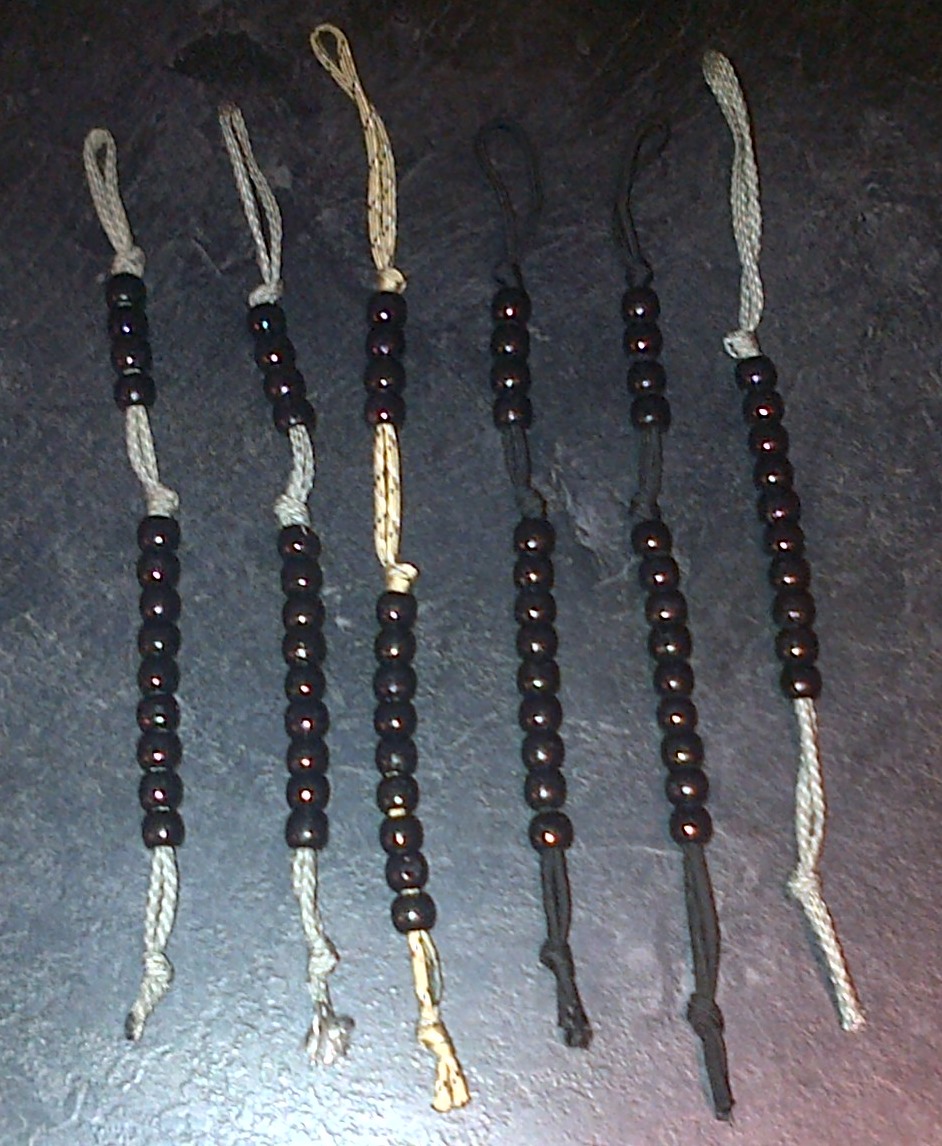
The purpose of the Pace Counter beads Pace beadsis to provide a distance measurement when travelling by foot. The image shows one that I have made, on this design there are 4 beads in the top section of the lanyard and 9 on the bottom. You can modify the variation of the counter to suit your personal preferences.
To start of you need to measure how many steps it takes for you to walk 100m (or another known distance that’s suits your unit of distance), the average is 65 steps but this will differ from person to person.
Using the step counter beads, for each 100m (or step multiple) one of the beads in the lower section is moved down as shown in the first image, when you get to the 9th bead you have completed 900m, on the next 100m you can reset the lower section of beads upwards and pull down one of the top, hence each top bead pulled is equal to 1000m (1km) travel, this continues to 4900m then on the next 100m you have reached 5000m or 5km and then you fully reset all beads and start again.

The simple way to measure your steps is to mark out 100m and then walk the distant counting the steps, repeat to check.

One use for this method of measurement is for night navigation where visual distances aren’t always available, an example would be where you have a waypoint target or are trying to reach a navigational Handrail, for example if you know that a river that you intend to use as a handrail is 5km away and you pass this distance with no sign of the river then you have likely to be off course and on a wrong bearing.

Be aware that travelling at night, varied terrain, inclination, and in different weathers is likely to change the amount of steps per 100m, therefore it is wise to gain your step count for each variation and adapt your count accordingly when using the Beads.

Why use the counting beads? They are easy to carry, act as a backup for satnav or pedometers.

From a preparedness aspect, alternative uses for the beads could be counting water intake / rationing, also the wooden beads could be used for fishing floats and the paracord could be used as a shoelace, tourniquet, tieing a knife to a stick for hunting, etc.

Telford and Wrekin-20150507-00118Available Product

I have Some Pace Count Beads that I have made up and these are available inclusive of postage £3.50 UK & £6.50 rest of the world. If you would like to purchase one please leave a message with your email address and I will contact you with my PayPal details.


Posted in Navigation | Tagged , , , , , , | Leave a comment

The Bee Diaries – Siting the Hive

The nucleus of Bees should be arriving in about a month, so now is a good time to test the site for the bee hive.

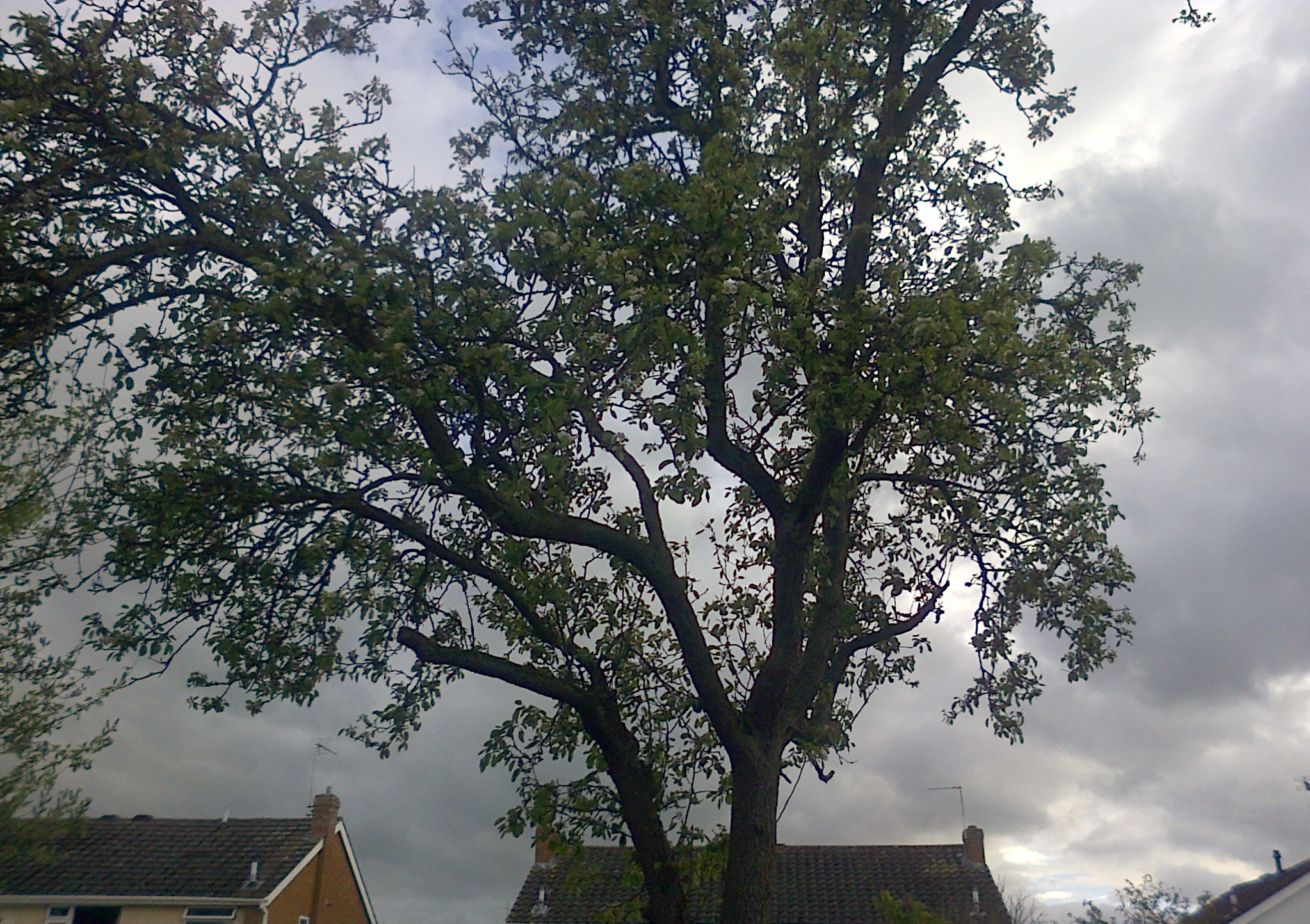
Our property has a reasonable sized garden for the type of house, when we moved in over 20 years ago we bordered an old orchard / horse paddock which was adjacent field, we still have a mature AppleIMG-20150503-00111 and Pear tree iIMG-20150503-00110n our garden from the original orchard.

Houses were built on the paddock a few years ago so their gardens now neighbour ours, the field is currently undergoing a new house build estate – so-called development!

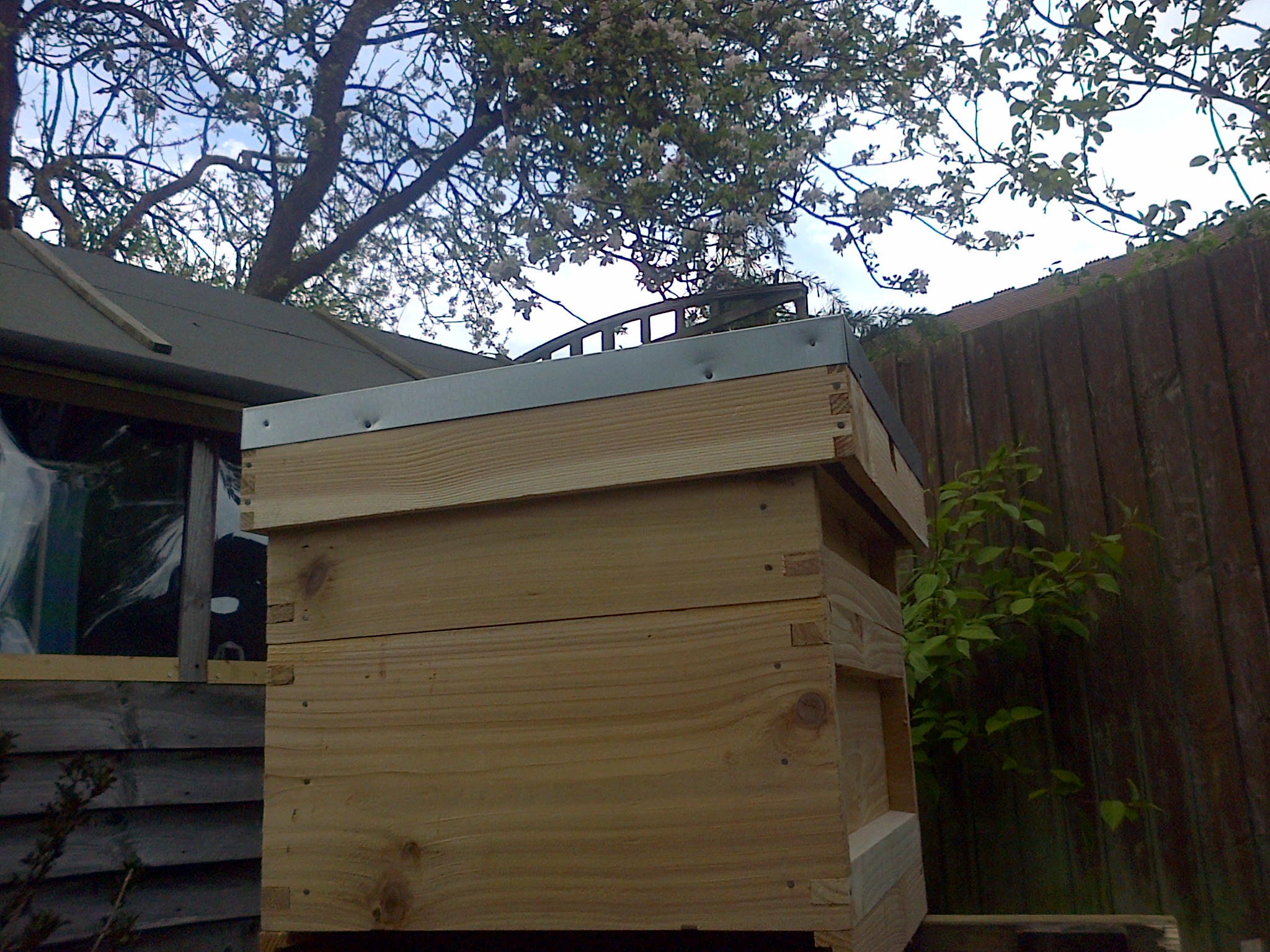
When placing bee hives you should be considerate of neighbours, the bees will tend to approach and depart the hive on a straight flightIMG-20150503-00104 path so direction is important. If like me you have fairly close neighbours you should ensure that the fences are higher than head height (at least 6ft), this will ensure that the bees angle of flight will take them up above head height. This should also be the plan if your garden borders a public right of way.

The image of the hive shows the angle at which the bees will enter my hive in this position, the left is a shed, over the fence in the neighbour’s garden is a large shrub area so they wont actually enter that part of their garden.If possible the hive should also face towards the rising sun to encourage them to fly in the mornings. The fences and structures will also help keep the wind factor down that can blow them off path and miss the doorway.

Flying upwards they will be into the apple tree, there is a second young apple tree over the fence.  We have also planted Blackberry, Black Current, Raspberry and a Plum Tree in this area.

Within the garden we have other sources of nectar & pollen, Forsythia, ClematisIMG-20150503-00113 ,Buddleia, rhododendron, roses and we have also planted Blueberry.  Our small pond should serve as one of the water sources. Our neighbour has a garden full of flowers, so hopefully we have a great deal of local sources of food. Further a field IMG-20150503-00112within 1/2 Km as the crow (or bee!) flies we have farmers fields and a garden centre.

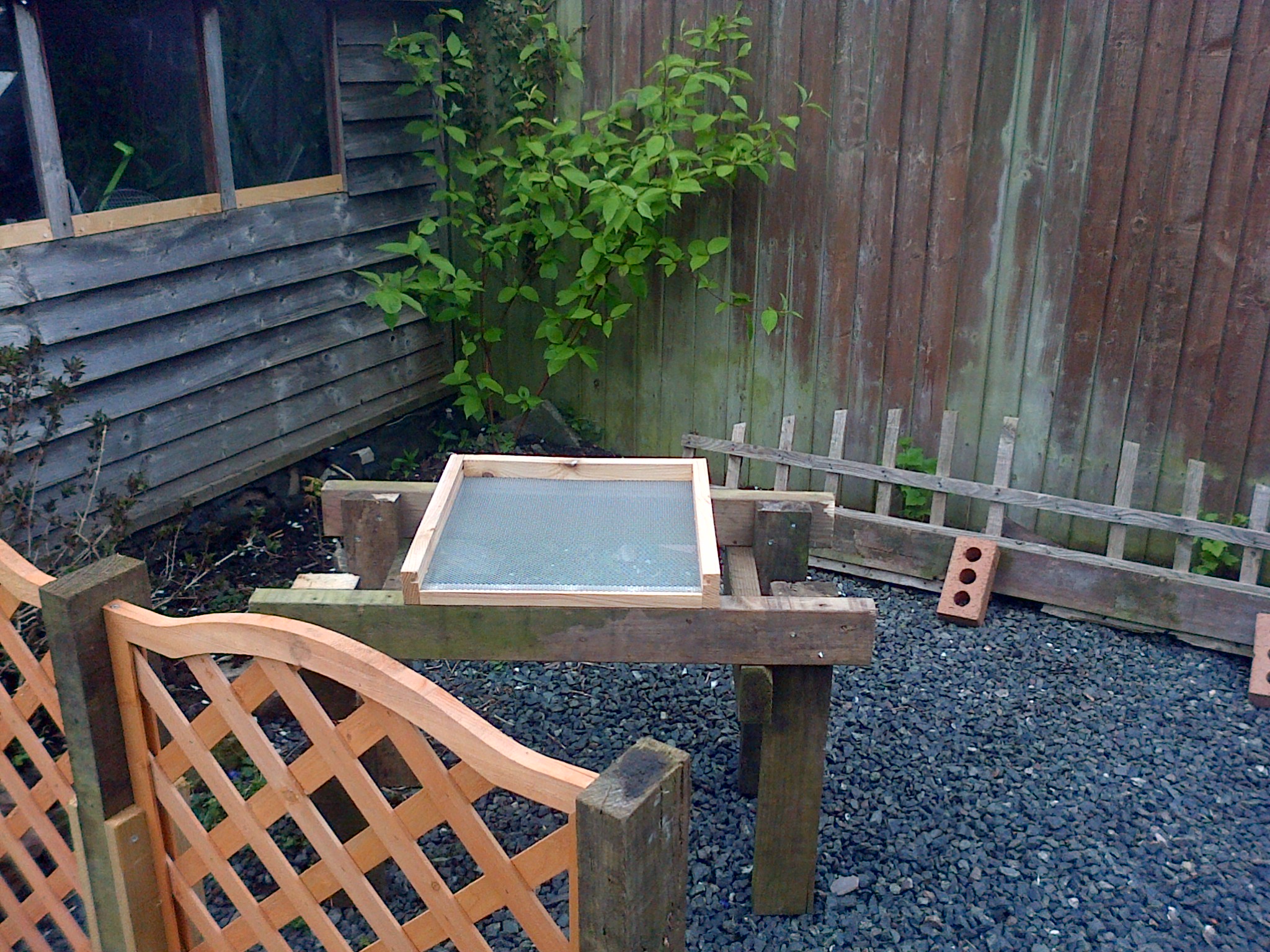
IMG-20150503-00109I have built a very basic stand for the hive using some old timber that I had laying IMG-20150503-00107around, this needs finishing, I will grind off the protruding screw threads and treat it with some wood preservative.

The height of the hive seems a little high so I may also take a bit off the legs.

The area will be cordoned off with low level fences into which I will grow fruit bushes to create a natural boundary IMG-20150503-00108/ edge this will stop the dogs from going in and knocking the hive and provide food for both us and the bees.

 Next Time…… I will be re-checking my basic equipment ready for the arrival of the nucleus of Bees.. thanks for reading.

Posted in Bee Keeping | Tagged , , , , | 2 Comments

EDC Survival Tin giveaway

my tinCarrying a small tin with essential items that would help you survive in the event of a disaster is simple and low-cost. This is refered to as Every Day Carry or EDC for short, the idea is that it is always with you or very close by and it serves as a last resort in most cases. Liken this to your wallet or handbag, cigarettes / lighter, keys, etc. and get used to just having it near.

Dale at the Survivalist Prepper website has produced a great video and write-up on this, my EDC (shown) is included so I don’t need to write-up on this subject! Thanks Dale!

Dale is also running a competition to win one of these so why not enter whilst you are there?

http://survivalistprepper.net/6-altoids-tin-survival-kit-ideas-and-giveaway

Posted in Preparedness | Tagged , | Leave a comment

Simple Water Storage and Rotation

Water Usage

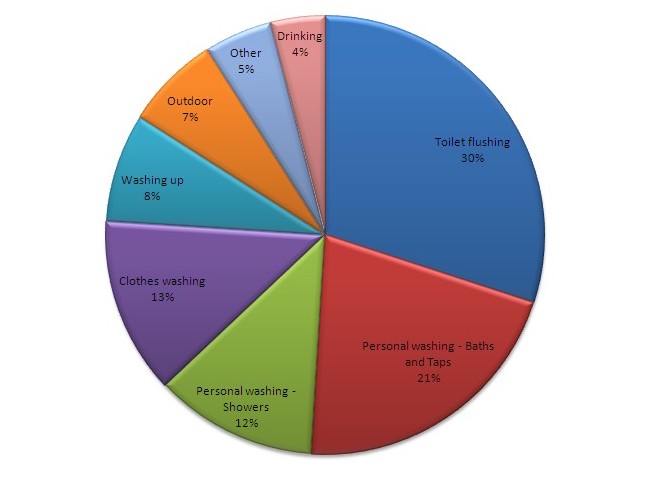
water_usage_in_the_homeThe average household per person uses around 160 litres of water per day, only 4% (6.4 lts) is used for drinking whilst the remaining is used for washing & cleaning with the large proportion for flushing the toilet.

Granted in a disaster, we can ration water and reuse as needed, so final use ‘dirty’ or ‘grey’ water may be used for flushing toilets, watering gardens etc., however the bottom line is that we require water to survive.

So how much is enough?

Human body weight is two-thirds water we use it for circulation, respiration and converting food for energy.  Water is lost through perspiring, breathing and when you pee. This lost water has to be replaced otherwise the body becomes dehydrated. This is further compounded in extreme heat and cold; in heat the body will lose large amounts through sweat, in cold air moisture is lost through breath

In a ‘goldilocks’ climate with little to no exertion we can live for about 3 to 5 days without water depending upon personal health.

On average we need around 8 glasses of water 1.5 to 2 litres per day.

Water Storage

The supermarkets hold around 3 days worth of supplies, data has shown that in a disaster, stocks are cleared well within this period with main food and water supplies disappearing in a day. People will fight over the last can of beans so why put yourself in unnecessary danger?

There are basic things that you can do immediately in the event of disaster, such as filling up buckets and containers, baths, sinks and restrict flushing of the toilet unless absolutely necessary.

Preparation now, will give you a head start, one of the most simple is collecting water in outside water-butts, these are a great way of collecting rain water, this can be cycled regularly by using it to water plants, rinse off washed cars, etc. In an emergency this can be filtered or boiled for cooking or drinking. A water-butt can hold around  100 to 200 litres, 3 of these on one property that’s 300 days of minimum drinking water!

IMG-20150425-00060Additionally you can start refill your PET cordial and fizzy drinks bottles, these 1 to  2 litre bottles once rinsed out can be filled with water and stored.

I use a simple wine rack in my storage utility room, this holds around 20 2 lt bottles (10 days of minimum water), I cycle this water storage by using it for the dogs water, the whole batch cycles once per week keeping this batch reasonably fresh.

Additionally you can store larger receptacles around the home and property to maximise your water storage.

IMG-20150425-00061Another good tip is to place a bottles of water into your freezers, these provide several good resources:

Frozen water will act a frozen battery bank to keep your goods frozen for longer if the power goes off.

It provides cooling where required, injury, heat, etc.

Finally, once thawed its water! to drink.

In my experience, the PET bottles don’t handle freezing too well so I use the HDPE bottles used for milk, these require a bit more washing but great for freezing.


Posted in Water Storage | Tagged , , | 1 Comment