The Friendly Swede – Beta Product Testing

Prepare 2 Survive are please  to announce their association with The Friendly Swede as Beta Product tester and evaluators.

“The Friendly Swede’s success story began in 2011, when John Lundqvist took a chance trying to set up a new business.

One might say that that chance turned out fairly well. Today, The Friendly Swede team has grown and the company now has substantial sales on three continents. Despite the growth the goal of the company is still the same: To strive for perfection and nothing less. This goes for our products as well as our customer service.

With an impressive growth during these four years The Friendly Swede’s story certainly is one of a kind.” – Source The Friendly Swede Website.

Over the next few weeks we will be evaluating some of their products providing an honest and fair review, The Friendly Swede has expressed their wish for a truthful assessment, what ever the results, further emphasising their commitment to quality.

Posted in Product Reviews | Tagged , , , | Leave a comment

Wild Camping – Applying Preparedness Principles – part 2 Boots and Socks

Last time I considered which Shelter would be the most adequate for a wild camping trip up into the hills and determined that the lighter the better, I discounted my hammock setup on the basis of not knowing whether there would be sufficient trees or not, opting for a one man tent and choosing the BERGHAUS Peak 3.1 Tent. After a rethink I have gone with the higher specification 3.1 Pro version. My reasons are the colour, green over red, should I ever need to use it to bug out anywhere, green will be less inconspicuous. Also the 5000 Hydrostatic Head (HH) is a all weather specification making it equivalent to the two man Coleman Pictor x2 tent that I already own.

A reminder that the preparedness principles are Food, Water, Shelter, Security, Health & Sanitation.  Continuing with Shelter is the clothing that you chose to wear and take with you, plus sleeping bag, rucksack and other water proof gear.

From bottom up, boots are going to be a key factor for both shelter and health, when choosing boots the fit is vital, wear thick socks, make sure that your toes don’t touch the front of the boot and that your ankle shouldn’t move about when going uphill. I recently purchased a pair of Solomon Quest 4D 2 GTX Boots
The Goretex (GTX) provides a good balance of both waterproofing and breath ability.  This boot is also light for its size at 640g per boot they are only slightly heavier than some lower cost walking shoes.
Alternatives to these would be Mammut T Advanced GTX ( also Gortex) or BERGHAUS AO Ridge Hiking boots.  Obviously it’s a personal choice based upon personal choice and finances, but personally I’ve been up mountains in cheap boots and not has great experiences so I promised myself not to buy cheap on essentials ever again if I can help it.

It is important to break these in before the main trip so wear them as much as you can on shorter walks.

Socks are the next choice, for an overnight trip two pairs should be sufficient based upon the principle that “two is one and one is none”, the second pair will act as a backup should your feet get wet or if you develop a blister on day one, these can then be worn on the second day.

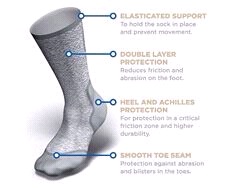
I opt for the double layer ‘soft’ socks and have several pairs of the own branded ‘GO Outdoors’ socks. The double layered construction gives you added protection from blisters, and keeps you comfortable in all conditions, so if you can keep them dry and ventilated with a good boot then you shouldn’t have to worry about your feet.

But choose what you are used to, blisters and irritation is not pleasant and you will be totally reliant upon you feet to be at top health to carry you there and back safely

Posted in Camping | Tagged , , , , , | 2 Comments

Wild Camping – Applying Preparedness Principles

One of the prepping activities this year will be to explore the remote areas of Snowdonia (Wales, UK), and to wild camp there. Leading up to this I want to produce several short blogs looking into the preparation for this including some of the equipment that I’ll be trying out.

As with any activity or project, its important to go back to basics and consider the basic principles of preparedness and to break these down into subgroups applicable, in this case, for a wild camping trip.

Food, Water, Shelter, Security, Health & Sanitation – So lets start with Shelter.

Shelter

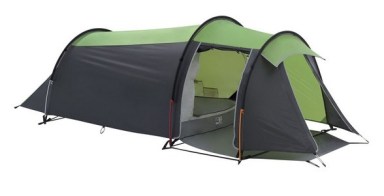
I currently have a Hammock and Basha / tarp (Untested),Yukon Hammock coleman pictor x2Bivi bag and a two man tent. I would be very tempted to try the Hammock, however due to the location (possibly part way up a mountain) this wouldn’t be sensible. The two man tent is a Coleman Pictor x2, its a good tent but at almost 4kg is going to be a bit too heavy for this trip.


So I am currently looking for a one person tent. I don’t want to buy cheap and buy twice so there are some key factors to consider based upon the reviews that I have seen so far:

  1. Tent poles – having read a great deal of reviews where people have been let down by fibreglass poles breaking during wind / storms, Alloy poles are a must.
  2. Size – The adverts don’t emphasize where your sleeping position is in relation to the angle of the inner tent sides, also the length can be tight for people 6ft and above, and sitting up can be near on impossible. Tip: Google a few chosen tents and look for YouTube reviews.
  3. Seasons – All weather or 4 season will usually be the best, at most you should be looking at 3 season, I have found the major difference is the
    Hydrostatic Head (HH) on the tent and ground sheet. This is the measurement of how waterproof a piece of fabric is, to test this the manufacturer will take a clear tube and clamp their material over the bottom end. They will then fill the tube slowly with water and watch to see how high the column of water can get before the material lets drips through. An HH rating of 2000mm means that the column of water was 2 metres (2000mm) tall before the material leaked. In real-world terms, where you have wind and gravity pushing rain into a tent fabric you will need a measurement of around 1000mm to resist light showers. Heavy rain and driving wind will create more pressure on the fabric and require a higher number of around 2000mm.

Using these as my main requirements I have considerrd the

  • Bergaus 3.2BERGHAUS Peak 3.1 Tent; and
  • Bergaus 3.1 pro

    BERGHAUS Peak 3.1. Pro Tent

These two tents appear to have the same inner tent, but the Pro has a HH specification of 5000mm as opposed to 3000mm, personally I prefer the green colour but at £129 compared to £69, the Peak 3.1 is my choice. It has Alloy poles and pegs for strength and lightweight. layout

The sleeping position is cleverly designed and has good head space for sitting up and preparing meals utilising the area inside the tent cover also ideal for storage of utensils and backpack.


So this is likely to be my choice for the trip certainly for the sleeping shelter. Next time we will consider clothing and other requirements.


Posted in Camping | Tagged , , , , , , , , , | 2 Comments

Group Cohabitation Survival

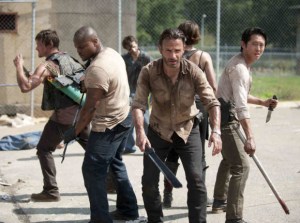
Group survival,tmp_19300-SurvivalTeam_WalkingDead549180195 by this I mean the actual continuation of people cohabiting or working together as a group requires the same formula as that used in long term partnerships in everyday life.
It’s said that anything that you’ve done successfully for over 10,000 hours makes you a master? Having been in a long term relationship, got me thinking of what the key to ‘surviving’ together is?
Now I’m sure there are many phycologists out there who would give you the answer but to me it comes down to working together towards a shared common goal with a balanced approach of both compromise and understanding.
It’s easy to see in a group or partnership that distraction creates an unbalance that causes a pull in opposing directions.
This means that all parties have a responsibility to recognise unbalance and to act on it with empathy and understanding.

This can be applied to marriage, cohabitation, group activities, etc.

Just my thoughts!

Posted in Communication | Tagged , , , , | Leave a comment

PSA Prostate – the follow up

Prostate_CDLLife-01A few weeks ago I reported on the PSA test for Prostate to help raise awareness.

My results came back abnormal, this wasn’t something that I was expecting and to be honest was a little scary. However the fact that I had taken time to research this in my blog meant that I was somewhat prepared and what the risks were and what I needed to do next.

Having the knowledge also meant that I could talk to the Doctor with some understanding of what it was we were discussing.

So my result came back as 3.39 but also had a F/T result of 0.08.

In my previous blog on this subject I reported that the following results were considered as normal:PSA

• 3 ng/ml for men aged 50-59
• 4 ng/ml for men aged 60-69
• 5 ng/ml for men aged 70 and over.

So my result of 3.39 didn’t seem that bad? the abnormal part of the result is the Free Test ratio of 0.08.

It confused me as to why the F/T result was even shown as everything that I had read suggested that a result of less than 4 ng/ml.

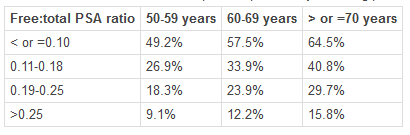
Any result between 4 and 10 ng/ml is the grey zone so a Free Test PSA ratio is provided to indicate the probability of finding prostate cancer on a needle biopsy, this is age dependantPSA FT

So this is why my result of 0.08 for my age (50) is considered abnormal, moreover the chance of finding cancer is 49.2%.

So after discussing this with my GP he decided to run new blood and Urine tests, these results have come back normal for Kidney with a new PSA result of 2.5, no F/T results were provided as expected with this result.

A physical examination revealed a normal prostate. My plan is to check this again in twelve months.

This has been an uncomfortable couple of weeks, even despite the knowledge of the statistics, plus the fact that 82% of Prostate cancers are curable.

There are a few things that cross my mind during this time with regards to preparedness, firstly, if anything serious was to happen, my wife or family would not have a clue of all of the passwords that I use to the many sites that I use. In this modern age of technology, social media and electronic banking and transactions. Detailing all of this security data  in one place goes against everything that we are advised, but keeping this in a secure safe is good option, additionally using a code system to encrypt passwords and letting your loved ones know what this is for if time comes for them to go through your password book will help.

The other thing that I considered, was that I’m not fit enough to be ill, therefore I am personally going to include this as a primary prepping activity.

I hope this helps others in the future.

Posted in Health & Fitness | Tagged , , , | Leave a comment

RFID – A hard Pill to swallow!

pillThis post has been inspired by a listener call on Jack Spirco’s ‘The Survival Podcast’, the listener, who claimed to be in the medical sector, raised the concern over RFID in pills, specifically with regards to the data being used by medical authorities / insurance providers to check whether medicine has been taken regularly and not missed.
This technology being used not only effects our civil liberties but has a far deeper long term concern, yes you could argue the benefit of ensuring an Alzheimer’s patient has taken their medication, but let’s face it this technology hasn’t been created just for the small proportion of society that forgets to take their meds.

pillBack in 2012 the Daily Mail, reported the technology with the headline “On sale, smart pill with ‘edible microchip’ that tells you and your doctor when the next dose is due”.
Frost & Sullivan in their report state ‘Boom in Smart Pills Will Reach a New Peak by 2018-2020’
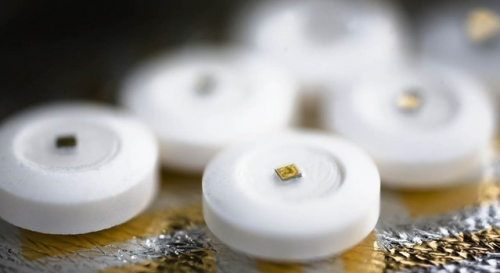
So how does it work? The microfabricated sensors are embedded into tablets and capsules during manufacturing. Upon ingestion and contact with gastric fluid, thin layers of magnesium, copper and gold inside the minute sensor react with the gastric fluid to start an electrochemical reaction, essentially creating a “battery” that powers the device.  The process lasts until the materials are exhausted, during which time the sensors communicate and sends to a skin-worn patch a unique digital code to identify the type of medication, amount of dosage and the time of ingestion [Nuviun.com]
But where does it all end?
• The child reported as disruptive in class scanned to see if they have taken their ADHD medication before being allowed in school
• Tracking of non-taken prescriptions.
• How long before your RFID signal is scanned in public areas and direct advertising is thrown up on electronic screens as you pass by
• Police scanning you as you’ve just been pulled over, the signal providing justification as they approach the vehicle for an arrest for driving on med’s.
• Potential criminal targeting of the vulnerable by scanning signals.

Just a bit of food for thought – where do you see this going?

Posted in Health & Fitness | Tagged , , , | Leave a comment

Bench Marks

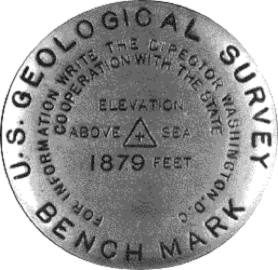
BmEdOften you see this type of marking ‘ Ordnance Arrow’ on stone structures, these are called Bench marks and are the origination of the modern use of the term benchmark when referred to as a set datum or point of reference.

Surveying Team credit: Hodgson, 1916

Before Global Positioning Systems (GPS), land was plotted and recorded using Transits (Theodolites)Transit_357 for angle /evelation and and metal tape for distance.

A section of angle-iron could be placed to form a “bench” for a levelling rod, thus ensuring that a levelling rod could be accurately repositioned in the same place in the future. These marks were usually indicated with a chiselled arrow below the horizontal line.

The height of a benchmark is calculated relative to the heights of nearby benchmarks in a network extending from a fundamental benchmark. A fundamental benchmark is a point with a precisely known relationship to the level datum of the area, typically mean sea level.(credit. Wikipedia)

Flush_bracket_G4863Other bench marks are Flush brackets (as shown), these are Triangulation points or trig points.  These points may be marked by disks similar to benchmark disks, but set horizontally, and are also sometimes used as elevation benchmarks.

VerticalControlPointProminent features on buildings such as the tip of a church spire or a chimney stack are also used as reference points for triangulation. In the UK triangulation points are often set in large concrete markers that, as well as functioning as triangulation points, have a benchmark set into the side. (credit. Wikipedia)

In the UK there is a database of these bench marks which can be found at bench-marks.org.uk. The database also allows users to confirm and add bench marks when found.

Could these be of some use should the GPS ever become unavailable?

I found the following interesting data from a Land Surveyor; Dave Davies (Bedfordshire, UK)

Benchmarks come in 3 levels of accuracy:

  • 3rd order which are by far the most numerous and mostly the “Ordnance Arrow” cut into walls and buildings, but on culvert headwalls or parapets they can also be dome-headed bronze rivets and some rarer weird types like sockets cut in the stonework which take a ball bearing of a particular size.
    Most cut arrows are a standard size, if you find a particularly large and irregularly cut one it’s probably one of the very early ones (1800’s) that originally had a quoted level on Liverpool Datum, not the modern Newlyn Datum. Churches sometimes have one of each.
  • 2nd order, mostly flush brackets. These are all uniquely numbered so make a good answer to prove that a team have actually found it if you can include one in an incident hike. You don’t need to visit it to get the number yourself, they’re on the OS website lists referred to previously.
  • 1st order sometimes known as fundamental benchmarks. There are a few 1st order flush brackets on the primary triangulation pillars, but often 1st order BMs are buried out of harms way because they are non-ferrous bolts in concrete blocks or piles founded on bedrock.
    Until recently these were still maintained by OS because they give a very accurate indication of how much the land mass is moving over time.

A trig pillar symbol on the map where there is no pillar on the ground doesn’t necessarily mean it’s been destroyed because some of these were buried marks too. Sometimes they had to be positioned for visibility reasons in places where a pillar would have been likely to get damaged or it was in the landowner’s way. Before GPS it used to be great exercise digging trying to find them when the OS reference dimensions related to walls and fences that weren’t there any more

Apart from the first order trig pillars and possibly the 1st order benchmarks, OS don’t resurvey either horizontal or vertical control any more to check for movement, or periodically verify it’s existence. That stopped in the 1970’s for cost reasons and then for a while they relied on private surveyors who used the marks to tell them when something had been destroyed. Although OS regard most pillars and benchmarks as redundant now that GPS is almost as accurate, benchmarks particularly are still very much in use by working surveyors on smaller jobs because it’s rather OTT to take £30k worth of GPS kit to a site when there’s a free benchmark down the road.

Posted in Navigation | Tagged , , , | Leave a comment

Prostate PSA – No finger up the bum!

PSAA few weeks ago I posted a blog that linked to ‘Surviving Prostate Cancer: Why Early Detection Can Be Important’, coincidently I saw a poster locally for a Prostate awareness event that included a Prostate-specific antigen (PSA) check.

Having attended this event and currently waiting for my results, I was shocked to learn of the statistics, according to the Cancer Research UK there were 41,736 cases in 2011, 10,837 deaths, with a 84% survival rate due to prostate cancer.

Is this a survival topic – Hell yes!

I was talking to a work colleague about this event, his comments were ” I should go along and get checked but it’s a one of those tests that you just tend to put off” this is one of the reasons for posting this, the misconception that guys think that this initial test is the ‘finger up the bum’ check, just to add this colleague was 59 years old and his older brother died of prostate cancer at 53 and he still hasn’t been checked!

Honestly, its a simple blood test that takes less than a minute, to give you an idea at this event they get anywhere up to 1500+ men attend over a 3 hour period, you take a number, listen to the speaker and get PSA tested.

You may be more likely to get prostate cancer if:

  • you are aged 50 or over
  • you are Black
  • your father or brother has had it.

This leaflet 2782-understanding-psa-test explains the test in more detail and what to expect back in the results, however a normal PSA level is less than:
• 3 ng/ml for men aged 50-59
• 4 ng/ml for men aged 60-69
• 5 ng/ml for men aged 70 and over.

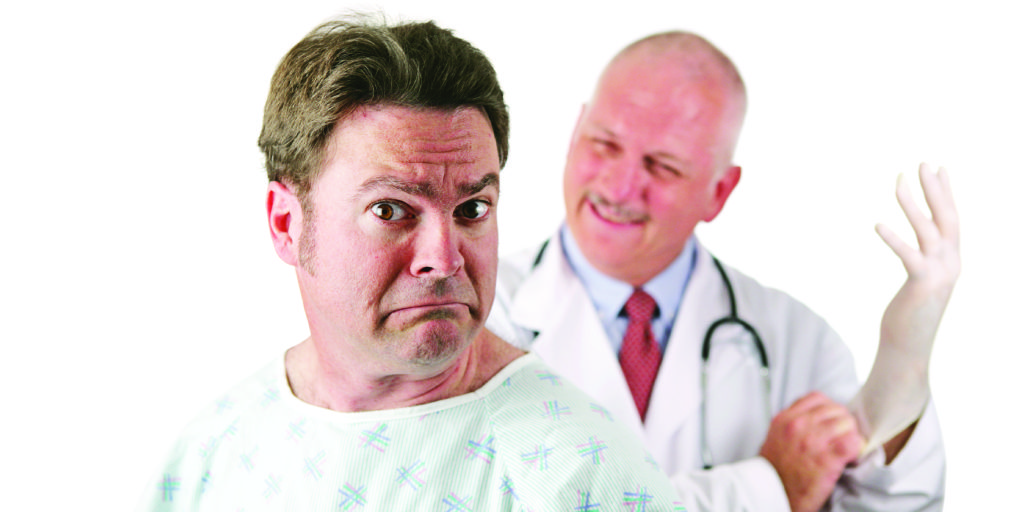
SnapgoestheglovesIf there are any issues then the next stage is a physical examination which really isn’t that bad guys!

Fingers crossed on my results!

Posted in Health & Fitness | Tagged , , , | 2 Comments

E.M.P. No finger on the pulse – Book Review

EMPHaving finally had time to complete this book purchased on Kindle quite a few months ago.

The story is about how “The world becomes technologically devastated following the electromagnetic pulse from a coronal mass ejection thrown out by the sun. Everyone, everywhere has been suddenly thrown back over a hundred years with no cars, computers or means of communication surviving the E.M.P.”

Eric does a great job in writing about the interconnecting lives of the characters within a community and those trying to make their way home or to a safe location and you “follow the efforts of a group of people as they try to make sense of what has happened to their lives.”

The story is graphical at times but portrays a true reflection of the effects of a disaster where we can see a quick breakdown of society, the evil element that we all know is present.

Lots of good survival tips used by the characters in particular an interesting firearm construction that would be ordinarily frowned upon outside the contents of a fictional storybook!

Personally I struggled with the written Scottish accent and had to double take most sentences to hear what was said and would have preferred it written in English, but I understand the reasons behind it.

I have had some communication with the Author Eric Methven through his and other Preparedness groups and follow his work on Amateur Radio and field radio.

Thoroughly enjoyed the book, awaiting the sequel which I understand is still being written.

It will be interesting read for those people in the preparedness community and those with their eyes open to reality of disasters.

Posted in Preparedness, Survival | Tagged , , | 3 Comments

Operation security, health and protection when abroad

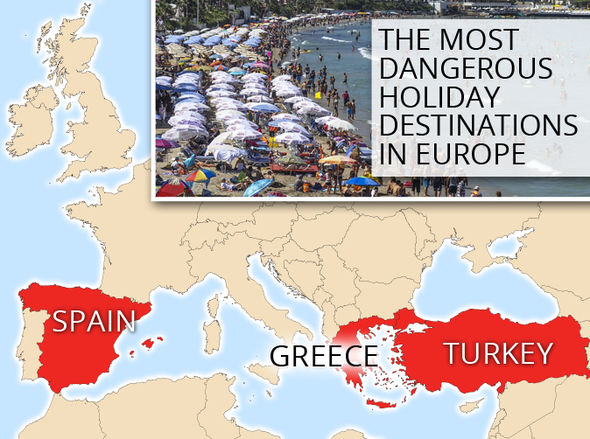
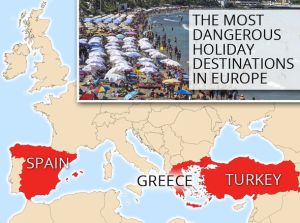
Countries-329685Having just ended a week away in a foreign country, operational security (Opsec), health and protection abroad is a topical subject.

Travelling abroad mixes us together with people that we are not familiar with, from various cultures and backgrounds, both locals and other foreigners. With this brings it’s own potential dangers, diseases or germs that you are not used to.
As a foreigner or traveller you are always vulnerable and a potential target for the criminal element.

Preparation

Good preparation can make your trip go a lot smoother, less stressful and more enjoyable.  I am lucky in that my wife takes care of the plans for our personal trips. Technology provides us with many tools that can be used to aid preparation.

  • Tripadvisor is a great crowd rating tool that can be used to check out accommodation IMG_0039and destination. Security, sanitation and food ratings should be a priority to check, on our trip this time my wife had said that her choice of hotel was based upon the exceptional food quality rating and that the hotel manager had responded to all of the comments made.
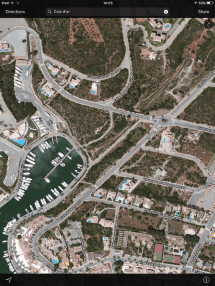
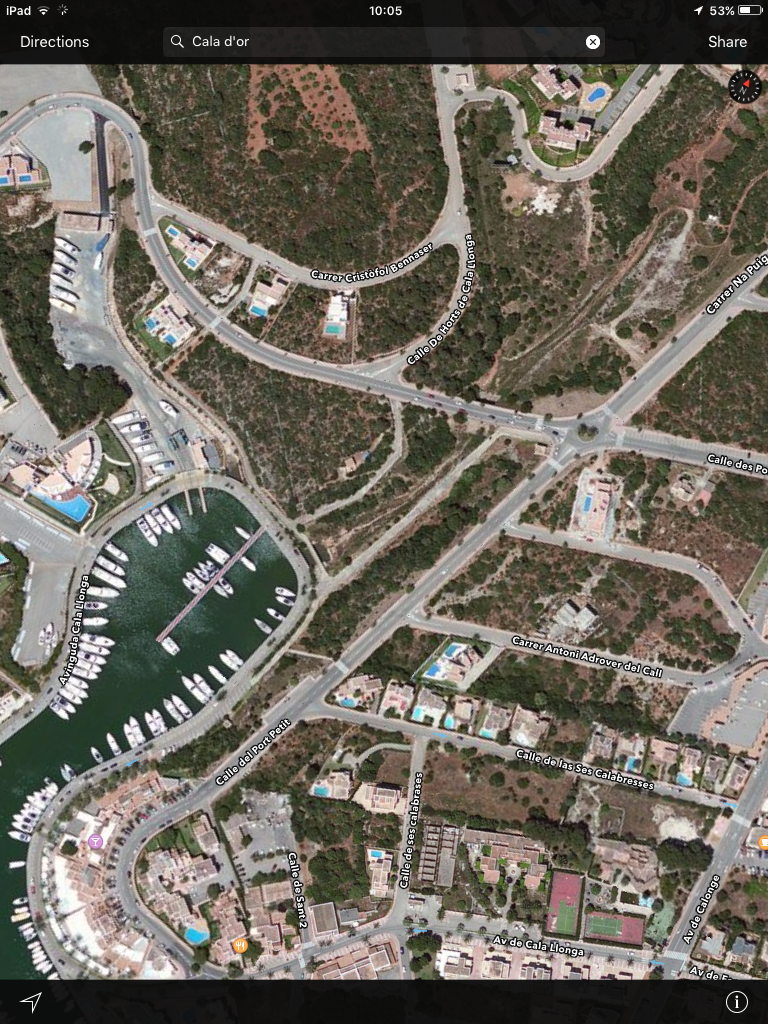
  • Google Earth is a good tool to visualise where you are going, here you can see buildings, land topology, water courses, etc.
  • Google street view allows to to visit virtually and become familiar with your intended destination.
  • Use the Internet to look at security of the area and legalities for your Everyday Carry (EDC) items.
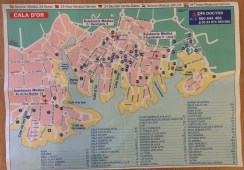
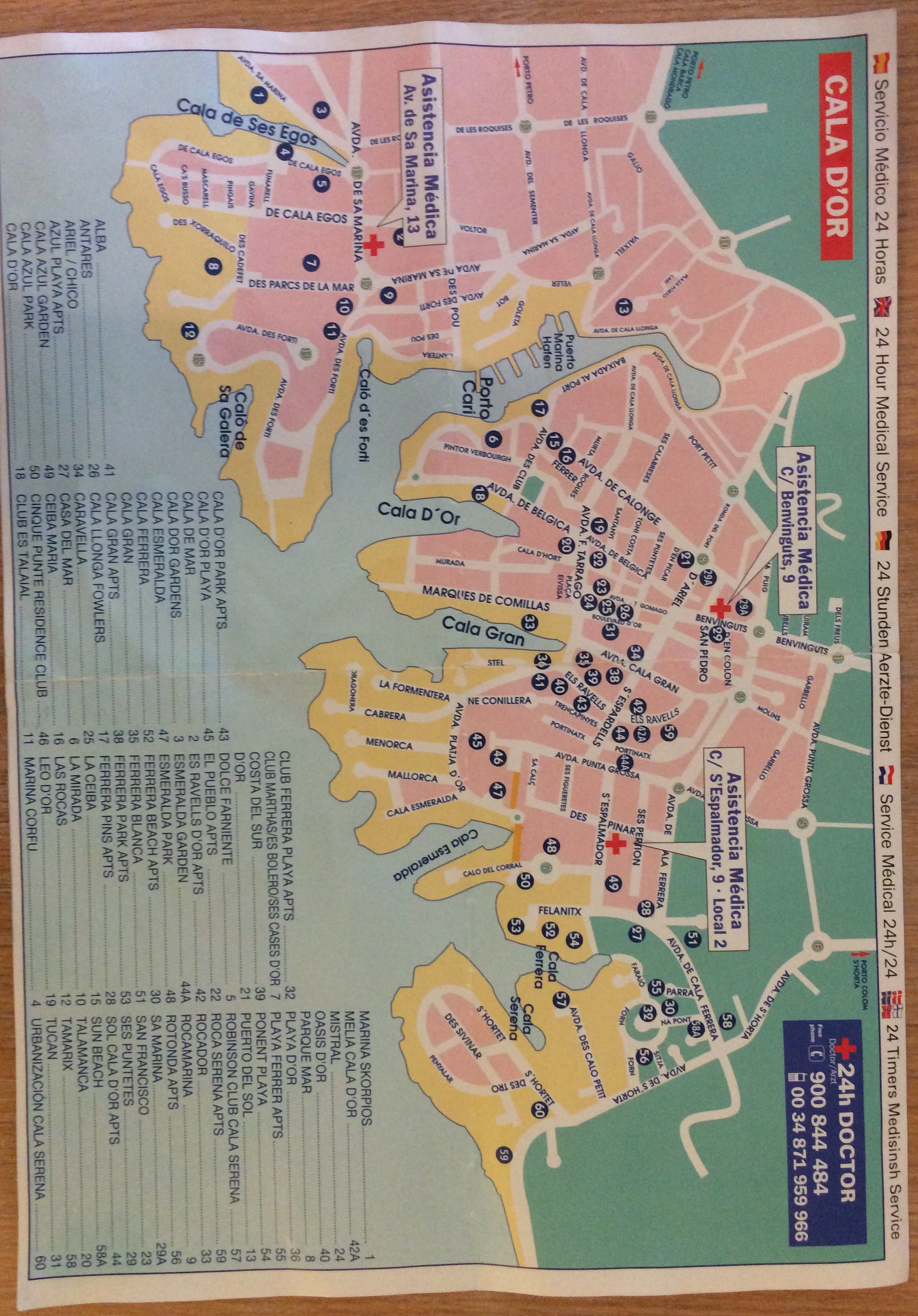
  • A map or print out showing locations of the medical facilities in the area is a bonus.IMG_2415
  • If you have a mapping App on your mobile phone make sure you download the country map prior to departure, the Apple App security may require additional personal data when using foreign WiFi, if this happens to be a credit card that you haven’t brought with you then you can’t download!

Journey

Travelling abroad especially by aeroplane restricts your EDC, the security restrictions imposed at the airport further limit what you can actually take in your carry on baggage, this puts you on a back foot from the outset, however with good planning you can still take some useful items with you.

Check in baggage

Use your check in baggage to take items not allowed in your carry on baggage, however remember if the main purpose of your trip is an holiday the pack accordingly with this in mind and don’t let you prep’s encroach too much into your holiday gear, after all the whole point of the trip is to have a holiday and relax. Opsec should be covert.
This is a list of items that we took with us on this trip; 3″ folding pocket knife, compact Southord lock pick set on a compass key fob, SOG multi tool, small high power LED torch, back up batteries, two N95 medical masks, Lifestraw Water filter, 2 light sticks, first aid kit, solar / battery bank charger with a multitude of connectors.

Carry on / EDC

I use a backpack as my bag, this also serves as an EDC or BOB when we arrive at our destination, in this bag I have paracord discretely woven to avoid attention, my keys which are attached into a pocket of my bag include usb memory stick fob that contains data, photographs that could be useful in an emergency.  I take a change of clothes just in case my main baggage is lost, my mobile phone and iPad security locked, a portion of the cash that we are taking (my wife will carry the remaining), my wallet is stripped to just 1 credit and 1 debit card, all other ID is removed.
Once through security additional items can be purchased to take onto the plane, water should be a priority and food if you need it.

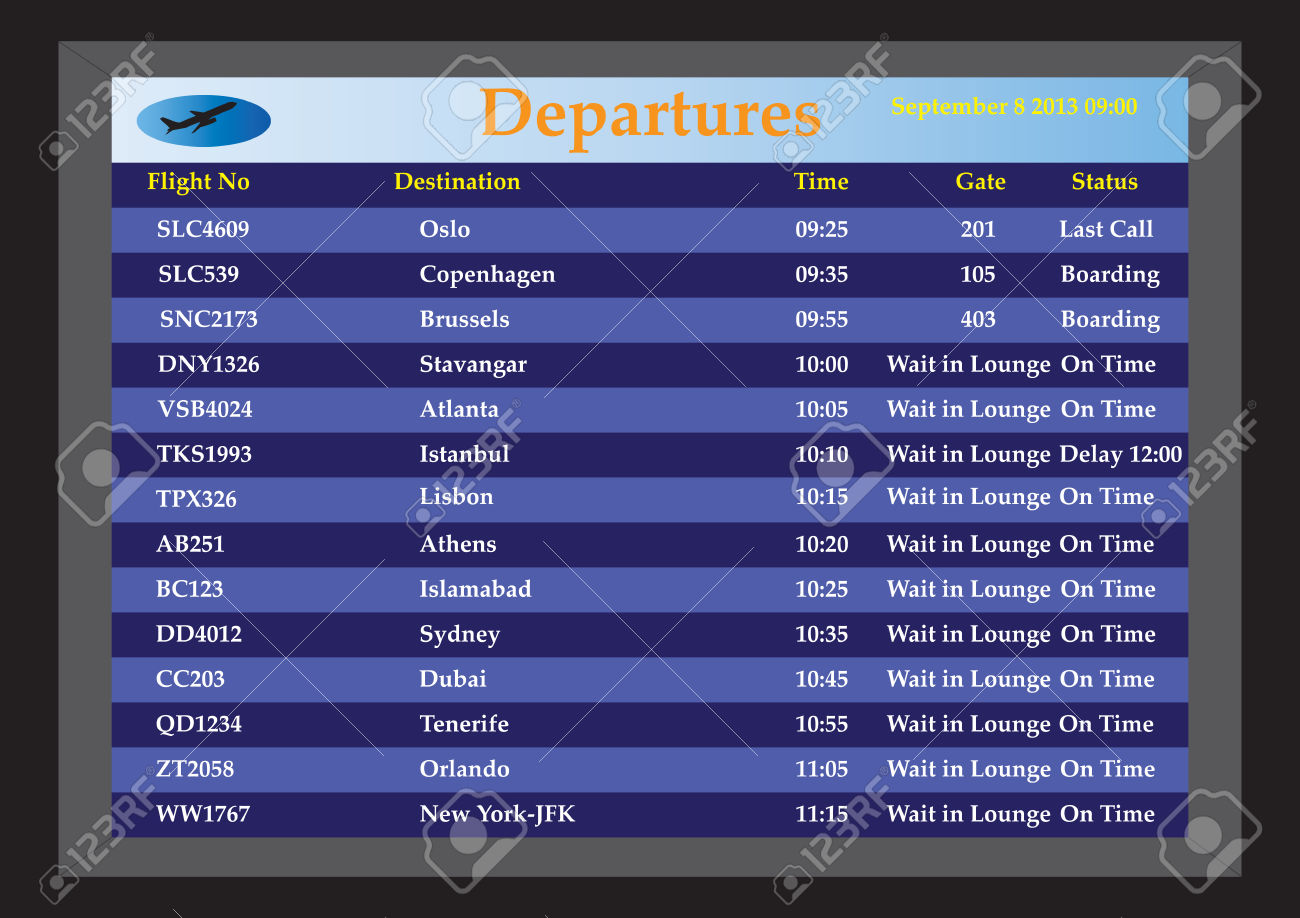
Use the time at the gate lounge to do a basic identification of potential threats (IPT), it’s your only time to watch people covertly all together in one place other than on the plane itself, I look for associations between people and groups, the people travelling alone and those in groups who could potentially be rowdy and a threat.

air blowersOn board any public vehicle where available, we always wear seat belts and direct the air blowers into our personal space preferably the face, the air is usually filtered to some level and is a positive air pressure, we feel that this goes some way to protect against peoples expulsions, coughs and sneezes.

Disembarking of the plane is usually tight and you can be in close proximity to others so be aware of your personal belongings. Once through security and baggage collection I like to find a quiet spot in the airport to transfer my EDC items from my baggage to my bag and pockets. It’s also a good time to pick up more water and food if required.

Try to obtain a map as soon as you can in the trip, even if it’s a free advertising version so you at least have something physical.
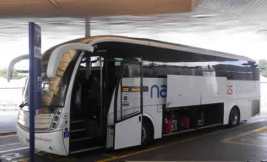
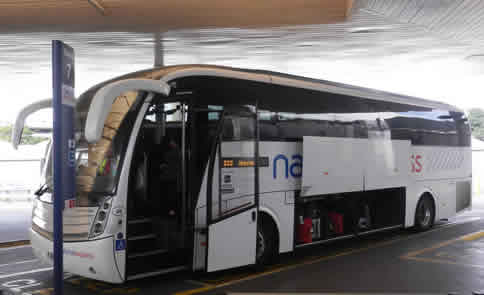
bus stowOn this trip our transfer to the hotel was by coach, the large baggage is stowed under the coach and typically the loading doors both side of the coach are left open awaiting other passengers. Where possible I like to sit up at the front as it’s easy to observe people as they board, use the drivers mirrors to view the sides of the coach to ensure your baggage isn’t tampered with or removed. It can take quite a while to fill the coach as multiple transfers are usually waited for, during this time my wife likes to wait off the coach and also checks the bags from there.

At the front of the coach also allows you to observe the driver, his driving style, observations and liveliness – most coach accidents are caused by drivers not concentrating or falling asleep at the wheel, here you are in the best position to take action if at all possible – It also means you get to see where you are going and take in the scenery!

Arriving and Settling in

Once checked into your accommodation do the basic checks, fire escapes, smoke alarms and window escapes along with overall room security, door locks etc.  If your preparation was good there should be no problems.

If there is a room safe that is either free or low cost try to use it, otherwise hide away you money, passport and valuables.

Agree upon a meeting point should you get split up or lost, also since the tsunamis I always check our elevation to sea level and agree an high point if at or close to sea level.

do not disturbOur preference is to hang the “don’t make up my room” or “do not disturb” sign on the door for the duration of the visit, we would prefer to make up our own room rather than risk a complete stranger going through our stuff. If you do need the room cleaning or towels changing try to ask the maids whilst you are around.

We always use bottled water for drinking and brushing, rinsing your mouth and toothbrush. If you are concerned about the water or you just want to avoid consuming it consider the common things that water is used for and avoid them, e.g.

  • Salad washing
  • coffee vendHotel coffee/ tea vending – something I never really thought about in the past but these are plumbed into the mains water and certainly the ones on our trip this time never heated the water to boiling.
  • Soda pumps – these also looked like they are directly connected to mains water.
  • Ice – from what I see most of these are purchased in bags by the bars so its likely that they are under the same restrictions as filtered water sale, but look out for bars making their own ice, the input water is likely to be mains supply.

For further reading check out NHS advice on Water Abroad

Out and about
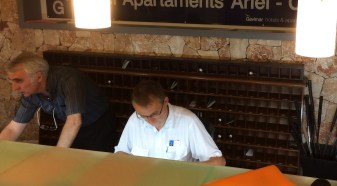
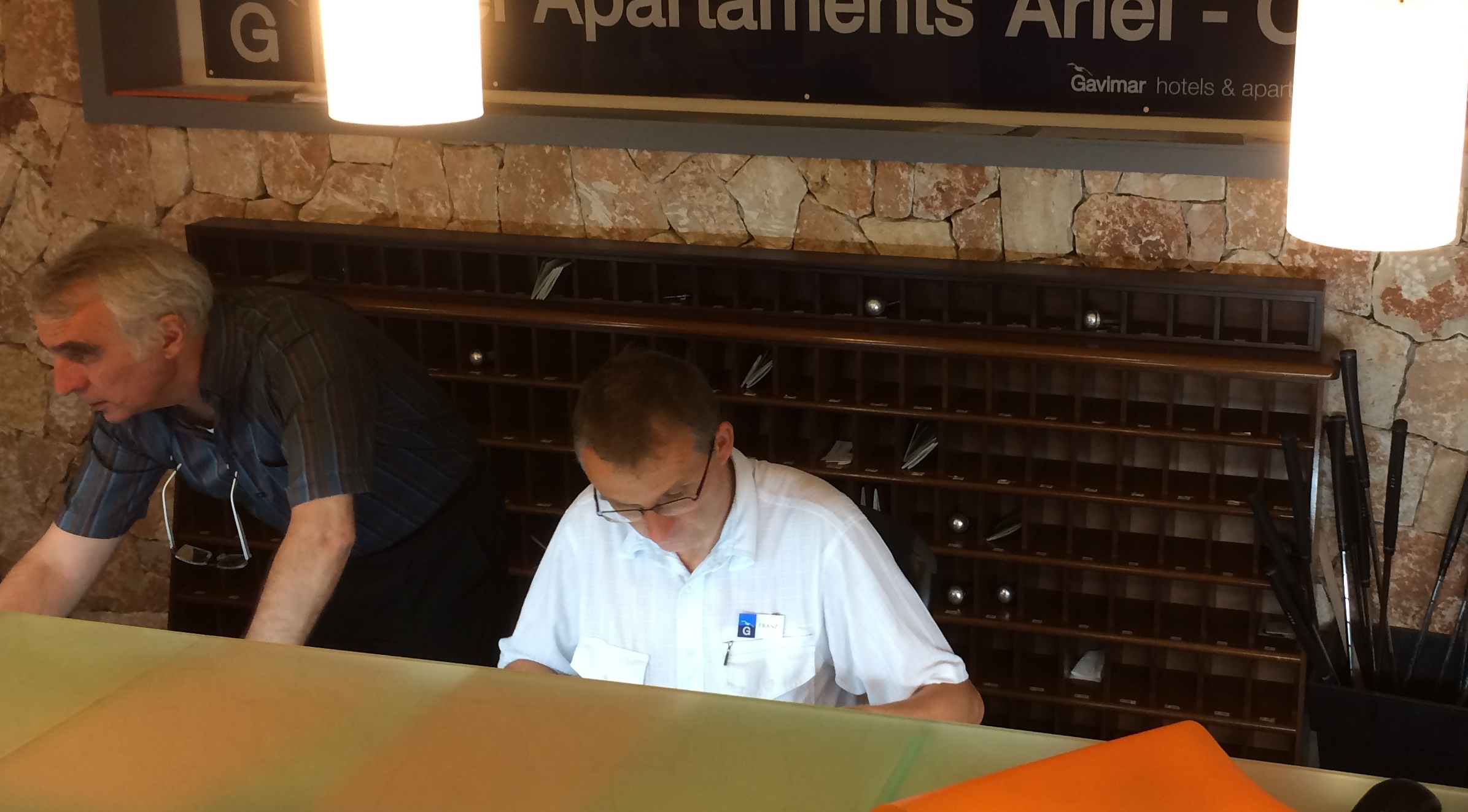
IMG_2454I don’t tend to leave my room key with reception especially where they are clearly on show for all to see or can be easily reached out of the key deposit box, it is so simple for a thief to ask for your room key and in the early days at least the receptionist won’t know you from Adam!

mona glassSunglasses as well as being protection for the eyes also go some ways to mask your expression from others this comes in handy during confrontation or even simple bartering for that new T Shirt at the market!

They also allow you to discreetly check your peripheral vision without turning your head. using peripheral vision is something that should be practised often, it can provide you with that extra split second reaction time that could potentially could save your life, e.g stepping off a pavement or pulling out in traffic.

Be aware of your surroundings  – I had a potential incident whilst walking out at night with my wife, upon hearing someone approaching faster than our walking pace to my left and walking hand in hand with my wife on my left, a discreet peripheral check confirmed that a young man was approaching quick and towards us, I slowed my step and passed my wife in front of me to my right, allowing the man to pass to my left where I could have controlled the situation, all this in a split second, my wife was none the wiser that I had made that move, awareness of your surroundings is crucial at all time.

This same principle is something that I think should be done when walking with young children, I personally have always kept them away from the kerbside of the pavement and away from the passing vehicles to allow me split second reaction time to take action should it be required.

Walking on the road always face the oncoming traffic to allow you to see them and them to see you, if they haven’t seen you you have time to react – remember that they may drive on the opposite side to what you are used to – also remember this when crossing a road.
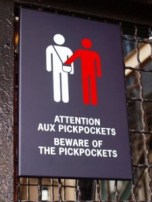
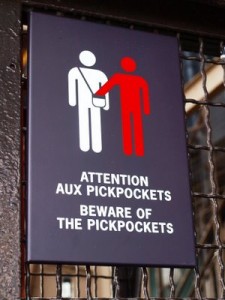
Paris-Pickpockets-225x300In crowded areas I tend to have my thumb touching my phone or wallet in my front pockets, however be conscious not to tap the location of your wallet as you pass the “Beware of  pickpockets” signs, it’s a dead give away as to the location of your valuables.

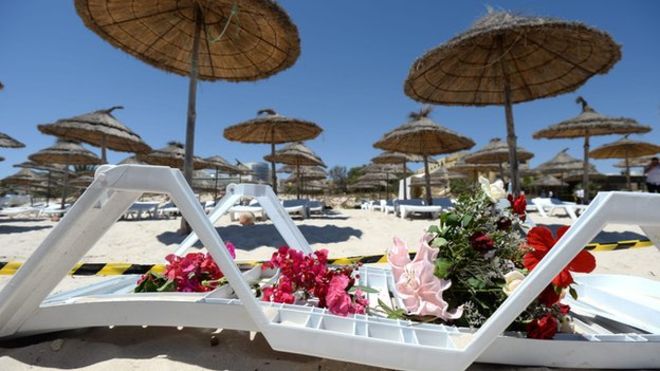
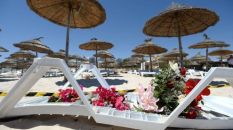
Check your IPT at every opportunity when entering new areas, restaurants, buildings, etc, know your exit points or safe areas should you need them. Even at the beach, let us we not forget the recent shootings in Tunisia._83901175_tunisia1
Medical and insurance

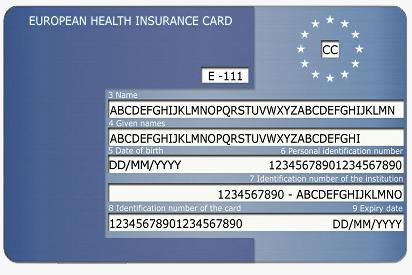
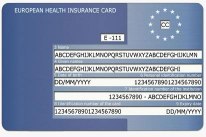
Travel Insurance should be acquired for trips abroad, you just never know when you are going to need something. Check to see if you get this as a part of your banking fees. In the UK we can obtain a European Health Insurance Card (EHIC), european-health-insurance-cardit’s free but not standard issue and has to be applied for, it’s surprising how many people don’t know about this. My wife adheres ours into our passports so they always travel with us. Up until now we have had no cause to use it, however sometimes it doesn’t matter how much you prepare mistakes can be made, on this trip my wife forgot to pack one of her prescription medications, luckily it wasn’t life threatening but could of meant a very uncomfortable week for her without them, I have a similar medication with less strength so we immediately put a plan in action to ration these if we couldn’t acquire any more. We found the nearest medical centre and explained the situation, they asked for our EHIC and we were able to obtain a prescription free and of charge paying only for the drugs at the chemist.
I am sure that I will add to this post in time – if you have any comments or additions please let me know and I’ll be sure to add them.

Enjoy your holidays or trips, prepare well, be aware and trust your instinct.
Posted in Health & Fitness, Preparedness | Tagged , , , , , , , | Leave a comment